


GS1 Digital Link 2D Codes
from the standard
to your production line
Imark Sistem implements GS1 Digital Link 2D codes on your production line — marking, verification, data integration and service — so your products are ready for 2D scanning at the checkout, in line with the GS1 Sunrise 2027 initiative.
Marking•Verification•Integration•Traceability•Service

from the standard
to your production line
Imark Sistem implements GS1 Digital Link 2D codes on your production line — marking, verification, data integration and service — ready for GS1 Sunrise 2027.
From the 1D barcode to the GS1 Digital Link 2D code
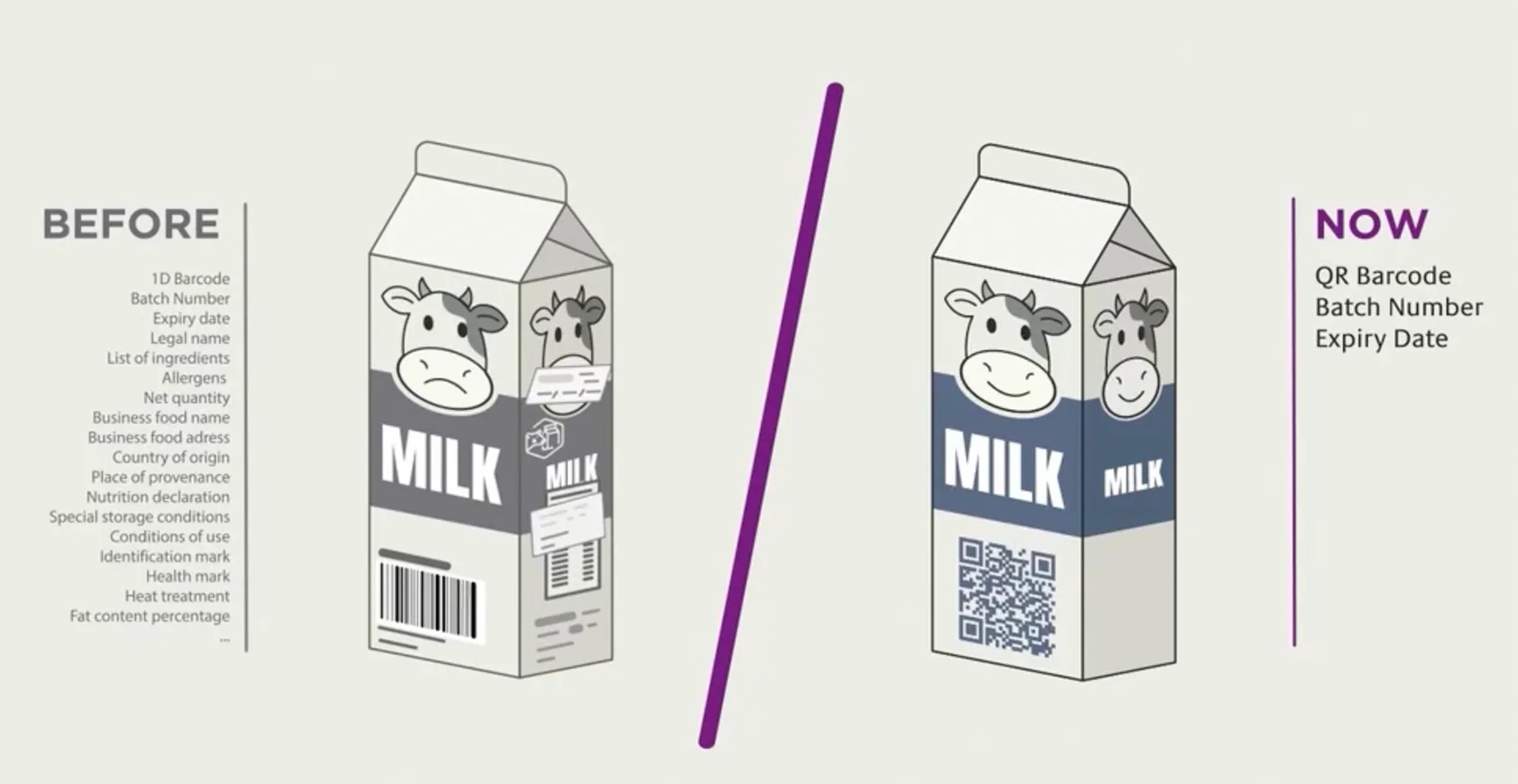
Through the GS1 Sunrise 2027 initiative, the GS1 standards organisation is preparing retail and the supply chain to scan 2D codes at the point of sale. The standard is defined and managed by GS1 — you can find details about the GS1 Digital Link standard at GS1 Romania. Imark Sistem implements it on your production line.
Unlike the EAN-13 barcode, which only identifies the product, a GS1 2D code (QR Code or GS1 DataMatrix) can hold the GTIN, batch, expiry date and serial number. With the GS1 Digital Link standard, the same code also becomes a standardised web address: one single code for checkout, traceability and digital information.
Markem-Imaje CIJ inkjet printers, thermal transfer overprinters (TTO) and laser marking systems, implemented by Imark Sistem, generate and print GS1 Digital Link 2D codes directly on the production line, with dynamic data.
GS1 Sunrise 2027, GS1 Digital Link and digital information
Three often-confused concepts, connected in a single ecosystem. In short: Sunrise 2027 prepares the scanning infrastructure, GS1 Digital Link makes the connection, and the information delivered depends on the product category and the applicable requirements.
GS1 Sunrise 2027
The move from 1D barcodes to 2D codes, preparing retail and the supply chain for modern scanning at the point of sale.
- 2D codes read at the checkout
- POS systems made ready
- More data in the same code
GS1 Digital Link
The GS1 standard that turns the product identifier into a standardised web link to digital information. It is not the content, but the mechanism for accessing it.
- Standardised web link
- Connected product
- Direct access from a scan
Digital information and compliance
What the person scanning receives: product information, packaging data, traceability or, for certain non-food categories, the Digital Product Passport (DPP).
- Food, beverages, pharma: batch, expiry, packaging info
- Non-food: DPP, sustainability, reparability
How a GS1 Digital Link 2D code works and what you can do with it
GS1 Digital Link turns the physical product into a digital access point: one code, the right information for every user — and the digital information can be updated without changing the packaging. For the standard’s specifications, see GS1 Romania.
Product
The physical product, in the real world.
GS1 2D code
Holds GS1 identifiers: GTIN, batch, serial, date.
Scanning
Any device can read the code: POS scanner or smartphone.
GS1 Digital Link
The identifiers become a standardised web link.
Multiple destinations
Access to the right information for every need.
A resolver routes every scan to the right destination — consumer, operator or compliance page — depending on who is scanning and where.
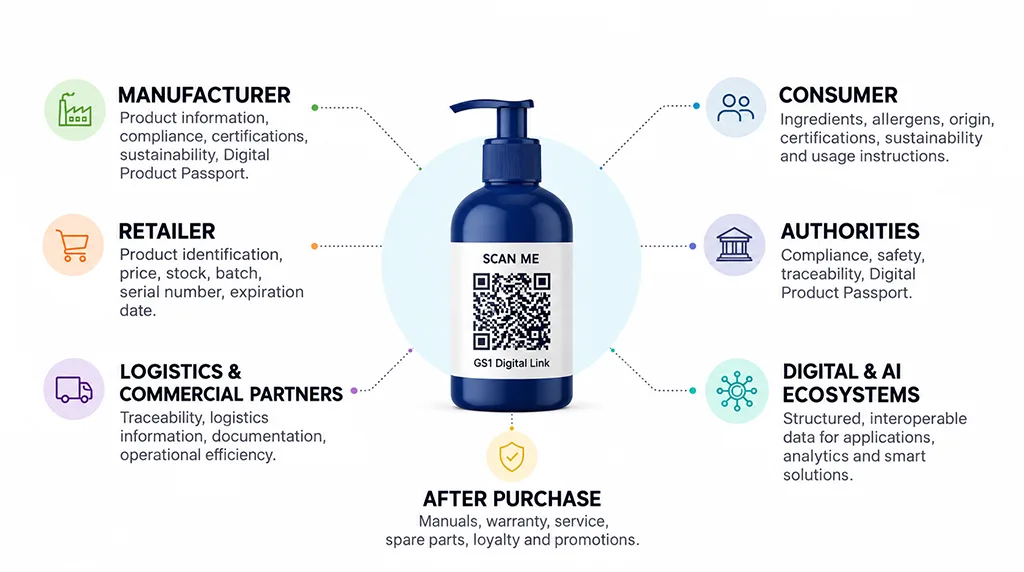
In production
Batch, expiry date and serial number printed inline, directly on the packaging, label, case or pallet.At the point of sale
Reading at the checkout and blocking the sale of expired or recalled products, based on the batch and date in the code.For consumers
Access to ingredients, allergens, certifications and origin, plus instructions for use and technical documentation.After-sales and marketing
Warranties, spare parts and after-sales services, marketing campaigns and loyalty programmes.In the supply chain
Traceability and aggregation from unit to pallet, integrated with supply chain traceability solutions and WMS.For compliance
Data accessible to partners and authorities; readiness for GS1 Sunrise 2027 and the Digital Product Passport.
2D codes at every packaging level
The GS1 2D code follows the product from primary packaging all the way to the pallet. We choose the right technology for your substrate and line speed.
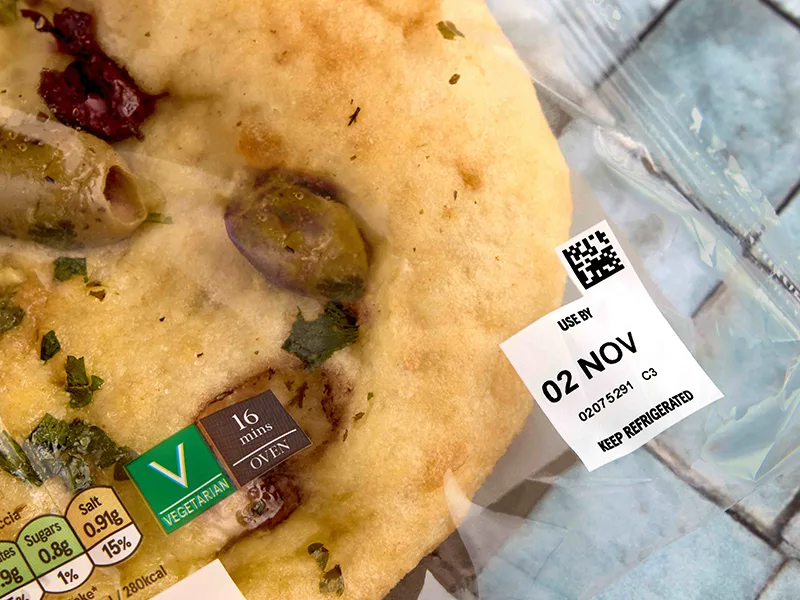
Primary packaging
Product coding, direct marking or labelling, code, presence and quality verification.
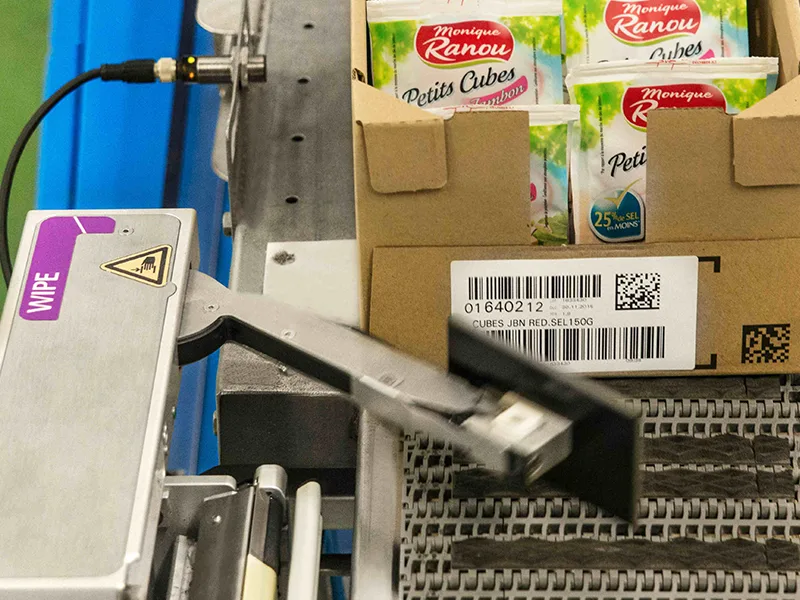
Secondary packaging
Labels, cartons, multipacks; linking codes between levels; verification and inspection.
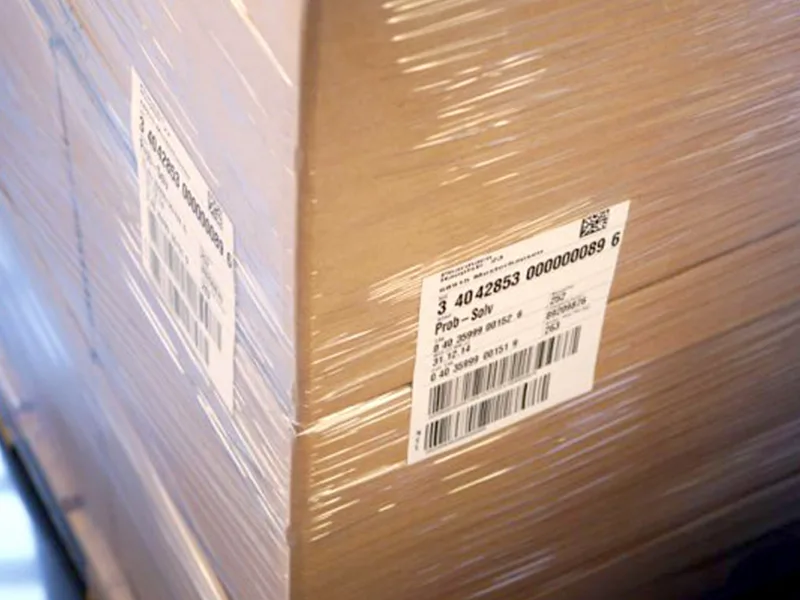
Tertiary packaging
Pallet labelling, aggregation and logistics traceability through to the customer.
The data flow is managed with CoLOS coding and traceability software, and code quality is verified with Auto ID scanning and verification solutions.
GS1 Digital Link 2D codes in practice — video
See in brief how GS1 Digital Link works, how to prepare the move to 2D codes with CoLOS software, and what a fully integrated production line looks like.
GS1 Digital Link: how 2D codes work
The GS1 Digital Link principle: one 2D code for checkout, traceability and product information.
Watch on YouTube →Moving to 2D codes with CoLOS software
From the barcode and an information-heavy label to a 2D code with batch and expiry, centrally managed with CoLOS.
Watch on YouTube →The integrated line: from pack to pallet
Automated marking, labelling and palletising — the 2D code follows the product across every packaging level.
Watch on YouTube →From GS1 standards to legal requirements
GS1 standards are not imposed by law, but they can support compliance with sector-specific requirements, the EU Packaging and Packaging Waste Regulation (PPWR) and the upcoming Digital Product Passport implementations for non-food products.
- Traceability: batch, serial, expiry
- Consumer information
- Safety and sector compliance
- Digital product information
- Labelling and packaging information
- Recycling, sorting, reuse
- Recycled content, environmental information
- Digital access to information via a 2D code
- Digital Product Passport (DPP)
- Sustainability and circularity
- Reparability and service information
- Structured life-cycle data
European Commission: ESPR →
GS1 defines the standard. Imark makes it work on your line.
Let’s talk about how GS1 Digital Link 2D codes can be implemented on your lines, with the right equipment, data and verification.
Talk to a specialist →Why work with Imark Sistem
As a GS1 Solution Provider Gold 2026 and strategic Markem-Imaje partner in Romania, Imark Sistem turns the GS1 standard into real-world operation on your line: global technology, local teams. We don’t just add another machine to your line: we build the complete solution — marking, Auto ID, software and traceability — integrated with your ERP and WMS.
Our team manages the project from the initial assessment through to commissioning and training your staff, with service and maintenance for marking equipment provided locally.
How we implement GS1 Digital Link 2D codes in 7 steps
A clear method, single-point responsibility and implementation without improvisation. One contact, from the initial assessment to service.
Initial assessment
We understand your objectives and context.
Technical design
We define the hardware and software solution.
Data integration
We connect the systems and the data flow.
Marking
We select and implement the coding technology.
Verification and reading
We validate quality, legibility and control.
Commissioning
We test, start up and train your team.
Service
Support, maintenance and continuity.
Are you ready for GS1 Digital Link 2D codes?
We come on site, analyse your line and tell you clearly:
- what can be printed
- where the risks are
- what needs to change for a correct 2D implementation
The Imark Sistem technical team replies within 24 hours with a free initial assessment.
FAQ about GS1 Digital Link 2D codes
Answers to the most common questions about moving to GS1 Digital Link 2D codes and GS1 Sunrise 2027.
A GS1 Digital Link 2D code is a 2D code that holds the product’s GS1 identifiers (GTIN, batch, expiry date, serial number, etc.) in the form of a standardised web address. The same code can be read at the checkout, used for traceability and scanned with a smartphone to access product information. The standard is managed by GS1; you can find details on the GS1 Romania page about GS1 Digital Link.
Through the GS1 Sunrise 2027 initiative, GS1 aims for retail point-of-sale systems to be able to read 2D codes by the end of 2027. 1D and 2D codes will coexist for a while, but manufacturers need to start planning now: data, marking equipment and verification.
No. GS1 standards are not imposed by law, but they can support compliance with sector-specific requirements (food, beverages, pharma), the EU Packaging and Packaging Waste Regulation (PPWR) and future Digital Product Passport requirements for non-food categories. PPWR does not explicitly require GS1 Digital Link, but it favours standardised, open digital data carriers.
Not necessarily. It depends on the data you want to include in the code. For a static GTIN, pre-printed labels may be enough. For batch, expiry date or serial number, inline printing with CIJ, TTO, laser or Print & Apply equipment is recommended. Following a line assessment, Imark Sistem tells you which existing equipment you can keep and what needs to change.
A code you can see is not automatically a code that reads. Quality depends on the substrate, contrast and geometry. We recommend inline verification with vision systems and grading to ISO/IEC 15415, targeting grade A or B, plus automatic rejection of products with non-compliant codes before they leave the factory.
CoLOS is the Markem-Imaje software platform that orchestrates coding: centralised print message management, data validation, integration with ERP, MES and WMS, and real-time flow control from data to execution on the line. Find out more about the available software solutions.
Yes. As the official Markem-Imaje partner in Romania, with 7 branches nationwide, Imark Sistem provides local technical support, training, maintenance contracts and fast access to original consumables and spare parts. See all our support and maintenance services.
Related technologies and solutions
Discover the full range of marking, identification and traceability solutions implemented by Imark Sistem.
Imark Sistem — your partner for GS1 2D codes
Marking, verification, integration, traceability and service for GS1 Digital Link 2D codes — implemented locally, with local technical support.


