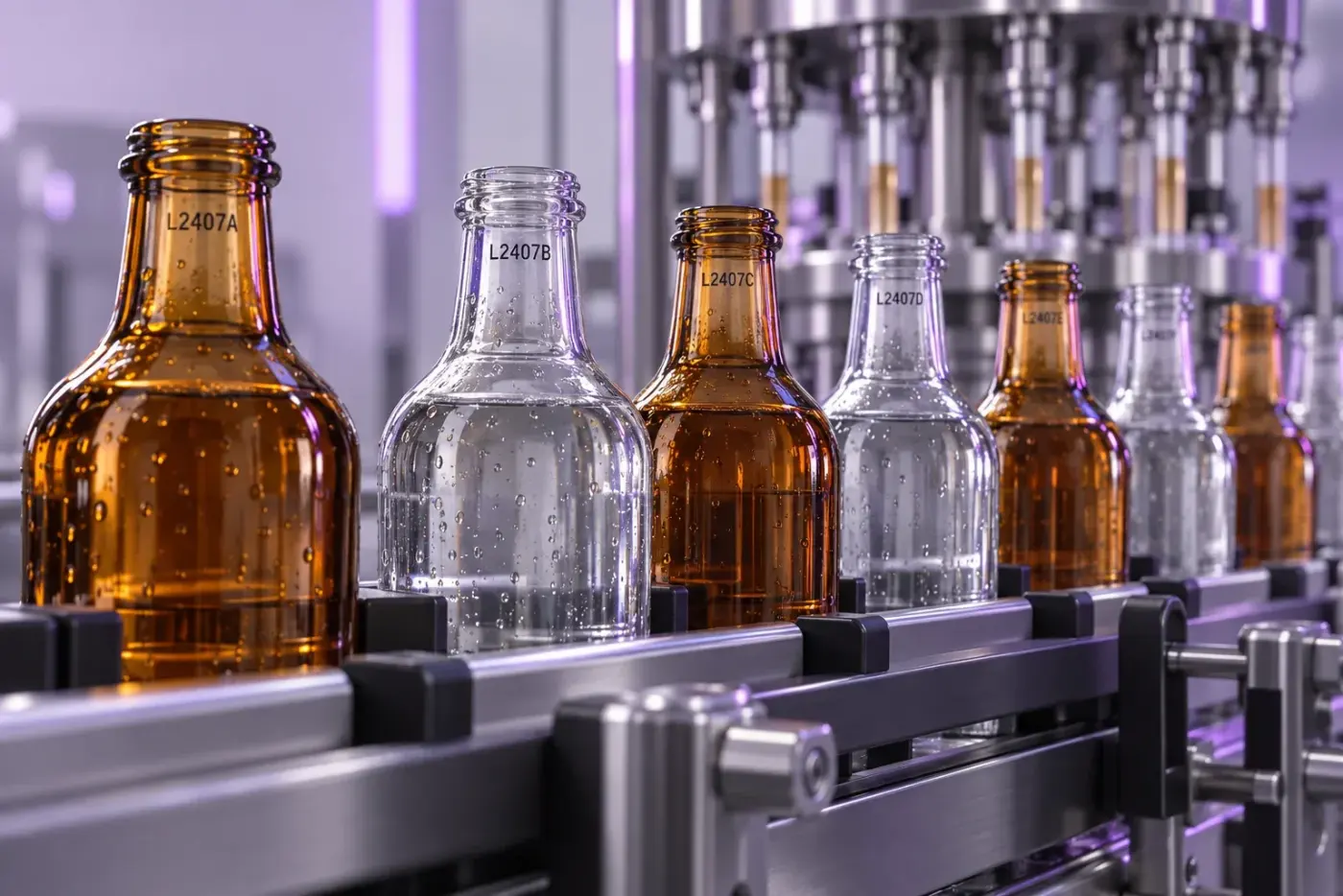
up to 600 dpi
high-resolution printing for text, graphics and codes meant for automatic reading
Cookies on imarke.ro
We use cookies the site and its forms need to work. Only with your consent do we use Google Analytics, to see which pages are visited, and Google Ads, to measure which ads bring quote requests. Cookie policy · Privacy
Marcare & trasabilitate
Etichetare & ambalare
Siguranță și conformitate
Transport & manipulare

Markem-Imaje technology · Industrial marking and coding
Clear codes, efficient integration, control over every product. Markem-Imaje Thermal Inkjet (TIJ) solutions print text, variable data, logos and 1D and 2D codes without contact, at up to 600 dpi and with low maintenance.
From individual packs and flexible materials to corrugated cardboard boxes, TIJ offers flexibility, precision and simple operation. Imark Sistem integrates the technology into your process through consultancy, equipment and consumable selection, configuration, integration and long-term support.

Technology for industrial production
high-resolution printing for text, graphics and codes meant for automatic reading
industrial marking speed, depending on resolution and configuration
print height via the TIJ 1200 model and compatible head configurations
support for multiple symbologies for identification and traceability
More than a mark
On a modern production line, product coding is an essential step for identification, quality control and traceability. The printed information must stay legible for operators and scanning equipment alike, under real process conditions.
Insufficient code quality, repeated interventions and manual message changes can affect productivity and generate extra costs. Thermal Inkjet answers these challenges through a precise, non-contact digital printing process, with a simplified architecture and easy-to-replace consumables.
At Imark Sistem, equipment selection does not start from a catalogue, but from analysing the process: we assess the materials, line speed, message size, operating conditions and integration needs, then identify the solution that fits technically and economically.
Thermal digital printing technology
The operator selects or configures the message: text, date, batch, counter, barcode or graphic. Information can be managed locally or through compatible software.
Sensors and synchronisation systems identify the product position and the right moment to print. Parameters adapt to conveyor speed.
The TIJ head applies the ink droplets in a digitally controlled pattern, directly on the surface. Precision depends on resolution, distance, product stability and ink compatibility.
The code can be read by operators or automatic systems. For traceability and compliance, verification is configured and validated against the relevant standards.
Benefits for productivity
Simple maintenance
The cartridge construction removes the complex ink circuit: you swap the consumable fast, with clean handling, and cut line downtime.
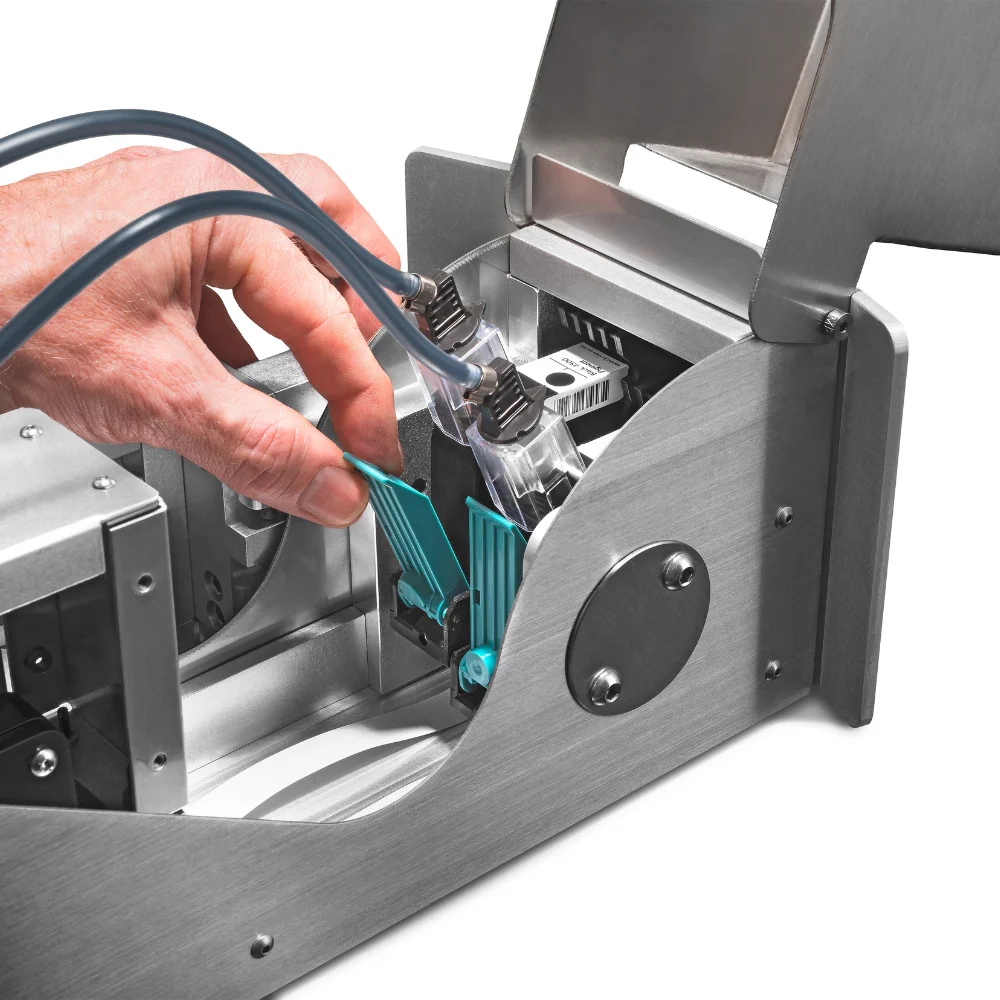
Resolution up to 600 dpi accurately reproduces text, small characters, graphics and barcodes, useful when printing a large amount of information on a limited surface.
Replaceable cartridges reduce the complexity of routine maintenance. Fast consumable changes and easy access lower intervention time.
With the right ink formulation, TIJ works on absorbent materials (cardboard) and on certain non-porous substrates. Adhesion is confirmed through testing.
Messages can be modified for changes of batch, format, article or order, using the same line for different products and packaging.
Support for 1D and 2D codes integrates marking into identification and tracking flows, controlled through software and verification systems.
Density and resolution are configured per application; for compatible volumes, bulk ink supply optimises the cost per mark.
Industrial equipment
Complete system
The TIJ printer mounts on the line together with the bulk ink supply, product sensors and signalling, for continuous coding at production pace.
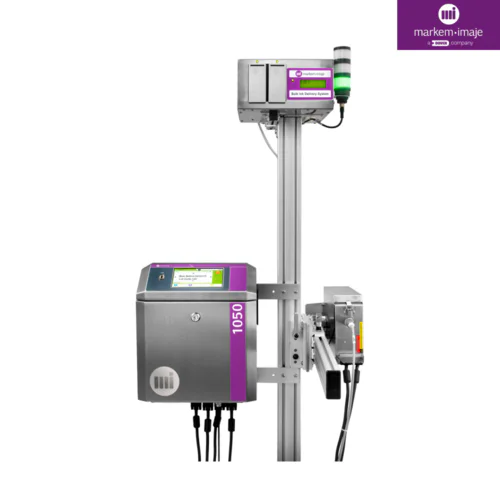
Compact and versatile coding
For low and medium volume production: a balance between code quality, simple operation and cost. Prints text, logos, graphics and 1D and 2D codes on packaging, labels and shipping cases. Recommended when the message is relatively compact and flexibility and code quality are priorities.

High resolution with large characters
For applications that need large characters, extended messages and legible codes on generous surfaces: a high-resolution solution for secondary packaging. Flexible multi-head architecture, matched to mark size. Recommended for case coding and managing secondary packaging.

Choosing the equipment
For compact marks and versatile applications: small and medium messages, individual packs, labels, films and shipping cases. Flexible for product changeovers.
Small–medium message · individual pack
For large marks and secondary packaging: large text, codes and graphics on cardboard boxes and collective packaging. Multiple heads for extended surfaces.
Large characters · cases and pallets
Imark Sistem recommendation
Marking on absorbent materials
Real example
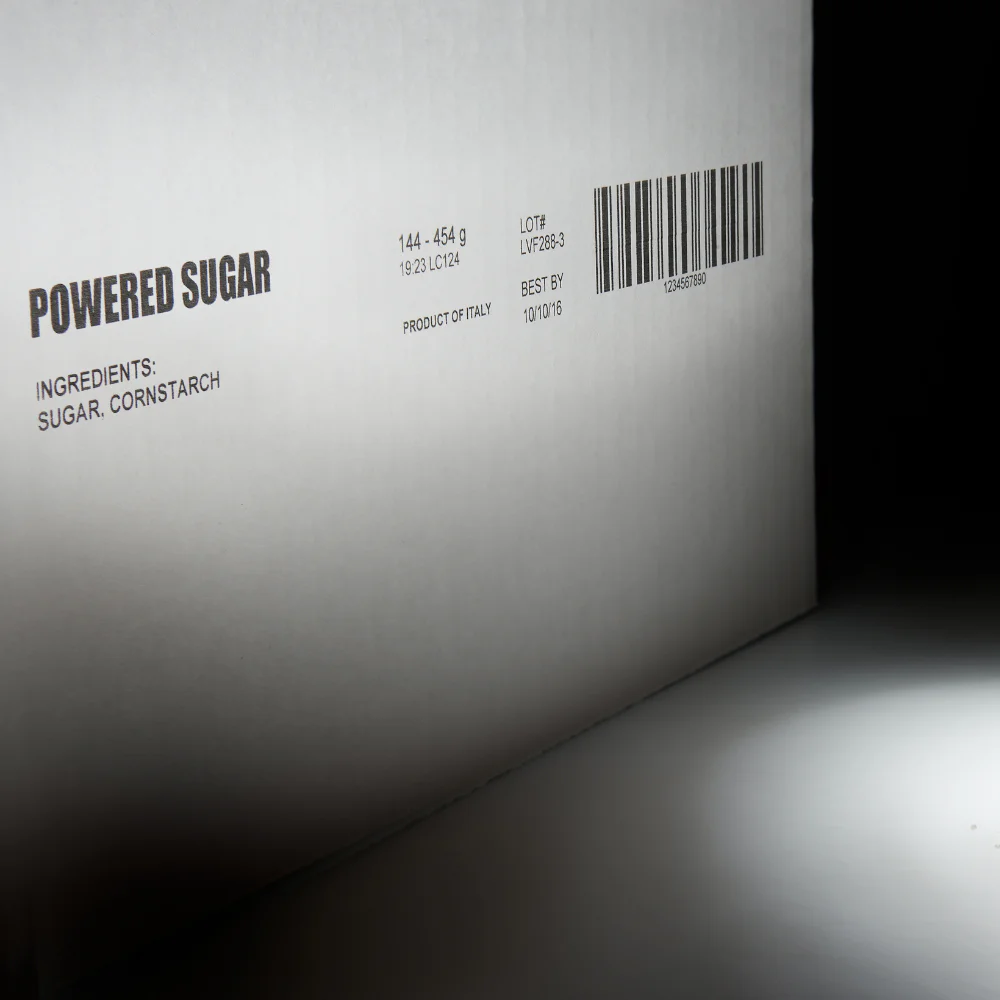
Batch, date, reference and barcode printed directly on corrugated cardboard, with high contrast and no pre-printed labels.
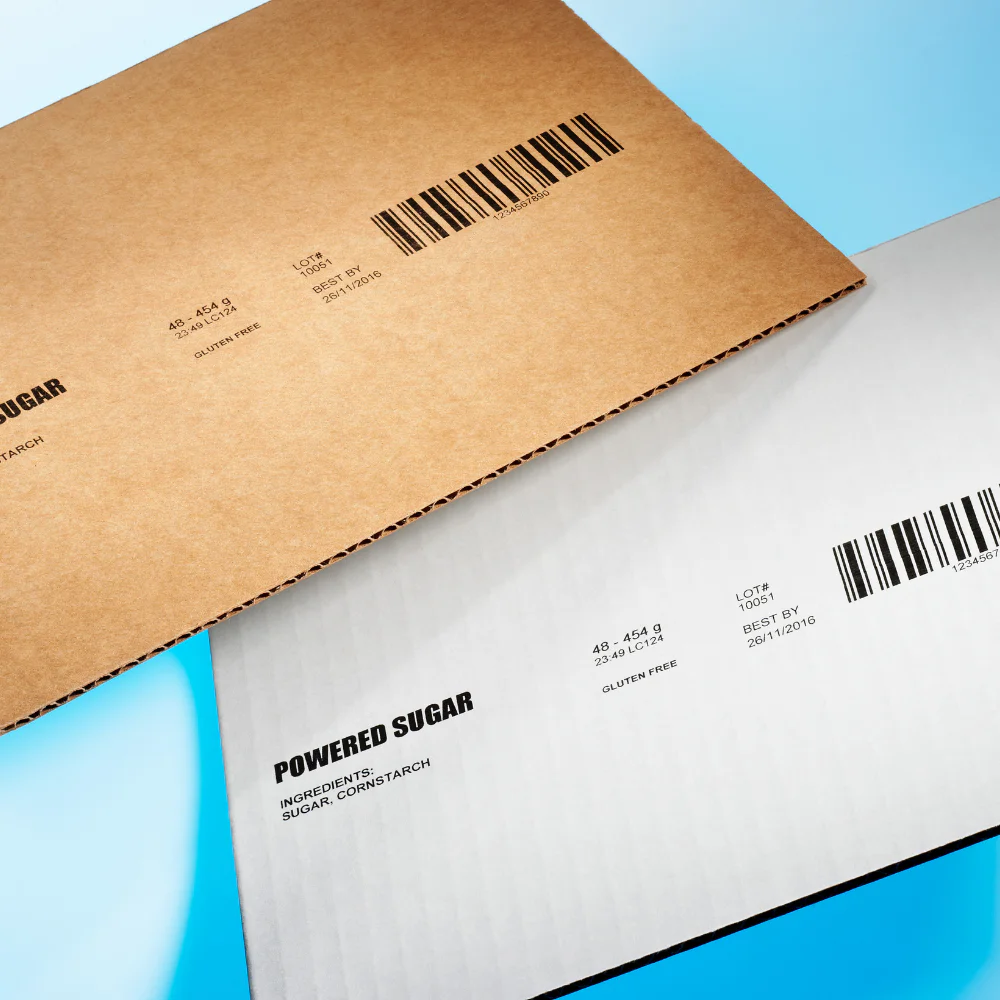
Direct printing of batches, references, production dates and barcodes on secondary packaging and shipping cases.
Text, promotional messages and variable information without changing the pre-printed artwork.
Coding boxes for storage and distribution, integrated with automatic identification systems.
Printing logos, pictograms and text for identification and communication.
Operational benefits
Coding on low-absorption materials
Coding on pouches, films, flow-pack, stick-pack and other flexible materials, with verification of adhesion and mark resistance.
Variable information on certain containers, caps and rigid surfaces, with the right print position and consumables.
Coding on certain metallised surfaces and aluminium foil lids, under conditions confirmed by compatibility testing.
Marking identifiers, batches and technical information on selected components where the material allows TIJ printing.
Essential: testing before implementation
Technology in industrial applications


From identification to traceability
Time information for identification and shelf-life management, configurable for different date formats.
Identifiers that link products to batches, orders or production intervals; they support traceability and quality control.
Symbologies such as Code 128, Code 39 and EAN. For automatic reading, size and contrast are validated.
A larger amount of information in a compact area; they support identification, traceability, serialisation and digital linking.
Visual identification elements; high resolution reproduces fine detail, within the configuration limits.
Counters, unique identifiers, campaign codes. In compatible applications, data comes from external software systems.
Solutions tailored to the process
Marking dates, best-before and batches on cardboard, paper, film and other compatible packaging, with ink chosen by substrate. Useful for variable messages and frequent article changes.
Applications: Boxes, pouches, flexible and collective packaging
Coding on containers, primary packaging and shipping cases, depending on material and conditions. For condensation, moisture or intensive washing, selection is made on a technical assessment.
Applications: Cardboard, collective packaging, compatible containers
Precision printing for small information, batches, serials and codes for automatic reading. In regulated applications, coding is validated with verification and compliance processes.
Applications: Boxes, labels, secondary packaging, Data Matrix
Batch identifiers, references and internal codes for quality control, on certain metal, plastic or treated surfaces where adhesion is met. For severe demands, alternatives are also assessed.
Applications: Components, sub-assemblies, technical packaging
Direct marking of cardboard boxes with product reference, batch number and the codes used in identification flows. It can complement or replace certain labelling operations.
Applications: Corrugated cardboard, collective packaging, distribution cases
For extended portfolios: fast message configuration for batches, references, identifiers and promotional information, integrated with production systems.
Applications: Custom packaging, boxes, films, labels
Mark quality starts with the consumable
Greater autonomy
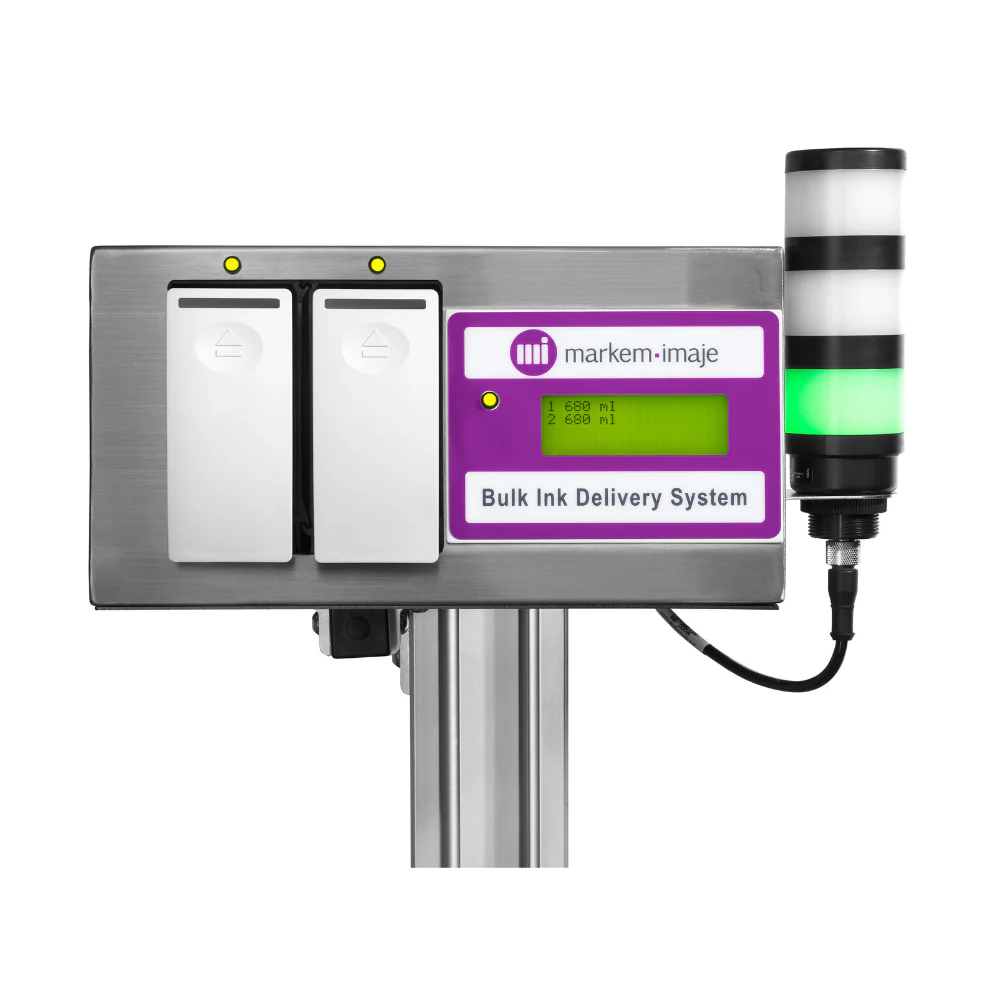
For intensive production, the Bulk Ink Delivery system reduces replacement frequency and keeps costs predictable, with level monitoring on the display.
Common for absorbent materials (paper, cardboard); an efficient solution for coding boxes and secondary packaging, depending on the material.
For certain non-porous materials, they provide the required adhesion and drying time. Compatibility with films, treated packaging and metallised surfaces is established by testing.
Optional large-volume supply solutions reduce the frequency of replacements, for predictable costs and greater operational autonomy.
Imark Sistem recommendation
Digitalising the coding process
Creating and managing coding formats in a controlled environment, distributed to compatible printers.
Automating information transfer and standardising messages reduce operating errors.
Integration with ERP, MES or other applications allows production data to be transmitted and correlated, per the available architecture.
With scanning, inspection and data management systems, coding becomes part of a broader identification and tracking process.
Ready for the evolution of traceability
Markem-Imaje TIJ printers 1050 and 1200 support multiple 2D symbologies, including Data Matrix and QR, depending on configuration. Generating a 2D code does not automatically guarantee GS1 compliance: it requires verifying the data structure, size, contrast, print quality and compatibility with reading equipment.
How Imark Sistem can help
Choosing the right technology
High resolution and simplified maintenance. For text, codes and graphics on cardboard, paper and compatible materials, including certain non-porous surfaces. Efficient when code quality and flexibility are priorities.
Flexibility for continuous marking on many materials and demanding conditions. Often on high-speed lines, containers, components, cables and varied shapes.
High-quality printing on flexible packaging, using a thermal transfer ribbon. Suited to packaging machines, directly on the packaging film.
Marking through the interaction of the beam with the material, with no ink consumption. Efficient for special permanence and maintenance needs, depending on the material.
Imark Sistem recommendation
Applied technical consultancy
The surface type, absorption, finish, temperature and treatments influence the ink selection and the technology.
The message height and width, number of lines, code size and available space on the pack set the head configuration.
Real speed, variability, product frequency and conveyor synchronisation correlate resolution and density.
Dates, batches, serials, text, graphics or codes for automatic reading; complexity influences the messages and integration.
Temperature, humidity, dust, ventilation, space and maintenance access influence the equipment and accessories.
Ink consumption, volume, maintenance costs and savings from simplifying the process define a sustainable solution.
Technology partner for industry
We analyse marking and identification needs in the context of the real production flow, to select the right equipment and configurations.
We connect coding with labelling, automatic identification, inspection and industrial software.
Solutions from an international manufacturer specialised in industrial marking and coding, with the corresponding documentation and consumables.
From initial configuration and commissioning to maintenance and technical consultancy, we keep the solution running correctly.
Answers to technical questions
TIJ stands for Thermal Inkjet, a digital printing technology that uses thermal pulses to project ink droplets onto the material. The process is non-contact between the printhead and the product, for marking text, codes and graphics.
The main difference is print height and head configuration. The 1050 marks between 12.7 and 50.8 mm (versatile, small–medium), while the 1200 marks between 50.8 and 203 mm (large messages, secondary packaging).
Yes, TIJ can be used on certain non-porous materials, with the right ink and a compatibility check. Adhesion, drying and resistance depend on the material and conditions; testing is recommended before implementation.
The 1050 and 1200 offer a maximum declared resolution of 600×600 dpi. The effective resolution is set according to line speed, mark size, code type and legibility requirements.
Yes. The 1050 and 1200 support several 1D and 2D symbologies, including QR and Data Matrix. For automatic reading, size, contrast and print quality are verified against the reading system.
TIJ is valued for low maintenance. Cartridges are replaced simply; routine tasks include checking print quality, cleaning and maintaining components. Frequency depends on the ink, environment and usage intensity.
Consumption depends on the printed area, resolution, density, message size and number of products. Cost per code is assessed knowing the message format, volume and consumable type.
Depending on configuration and software, printers can be integrated into automated data management processes. CoLOS® platforms allow message management flows and connectivity.
Yes, for certain food packaging, with the right equipment and consumables. Material compatibility and food-safety requirements are evaluated separately, especially when ink may contact the product.
In certain applications, yes: direct printing reduces the need for labels for variable information (batches, dates, references, codes). Labels remain necessary in many processes, depending on format, material and logistics requirements.
Contact us by phone or through the form. For a relevant recommendation, useful details are: the material, code size, line speed, production volume and integration requirements.
A complete portfolio of industrial technologies
Continuous coding on many materials and moving packaging, including high speed.
Discover the CIJ printersHigh-resolution printing on flexible films and packaging, by thermal transfer.
Discover the TTO printersFor applications with no ink consumption, depending on material and permanence needs.
Discover the laser solutionsAutomatic printing and application of labels on products, cases and logistic units.
Discover the labelling systemsInformation management, equipment integration and connected identification processes.
Discover the software solutionsWhether you need a new coding system, are modernising an existing line or evaluating alternatives to reduce costs, Imark Sistem specialists support you in assessing the options. Tell us about the material, code size, line speed and production volume. Phone: 021 255 71 74.