
3 identification approaches
Direct printing on the pack, label print-and-apply, automatic logistics labeling.
Marcare & trasabilitate
Etichetare & ambalare
Siguranță și conformitate
Transport & manipulare

Secondary coding and logistics labeling · Markem-Imaje
The right information, on the right pack, at the speed of your logistics flow.
From the moment products leave the packing line to their receipt in the warehouse or delivery to a distributor, every case and every pallet must be identified clearly, verifiably and connected to the correct data.
Imark Sistem provides industrial solutions for direct printing on corrugated board, large-character coding, automatic label printing and application on cases, and pallet labeling in line with GS1 requirements. We integrate Markem-Imaje equipment, consumables, reading systems and software into a coherent process. The choice does not start with the printer model, but with the pack, the information to be printed, the position of the code and your productivity goals.
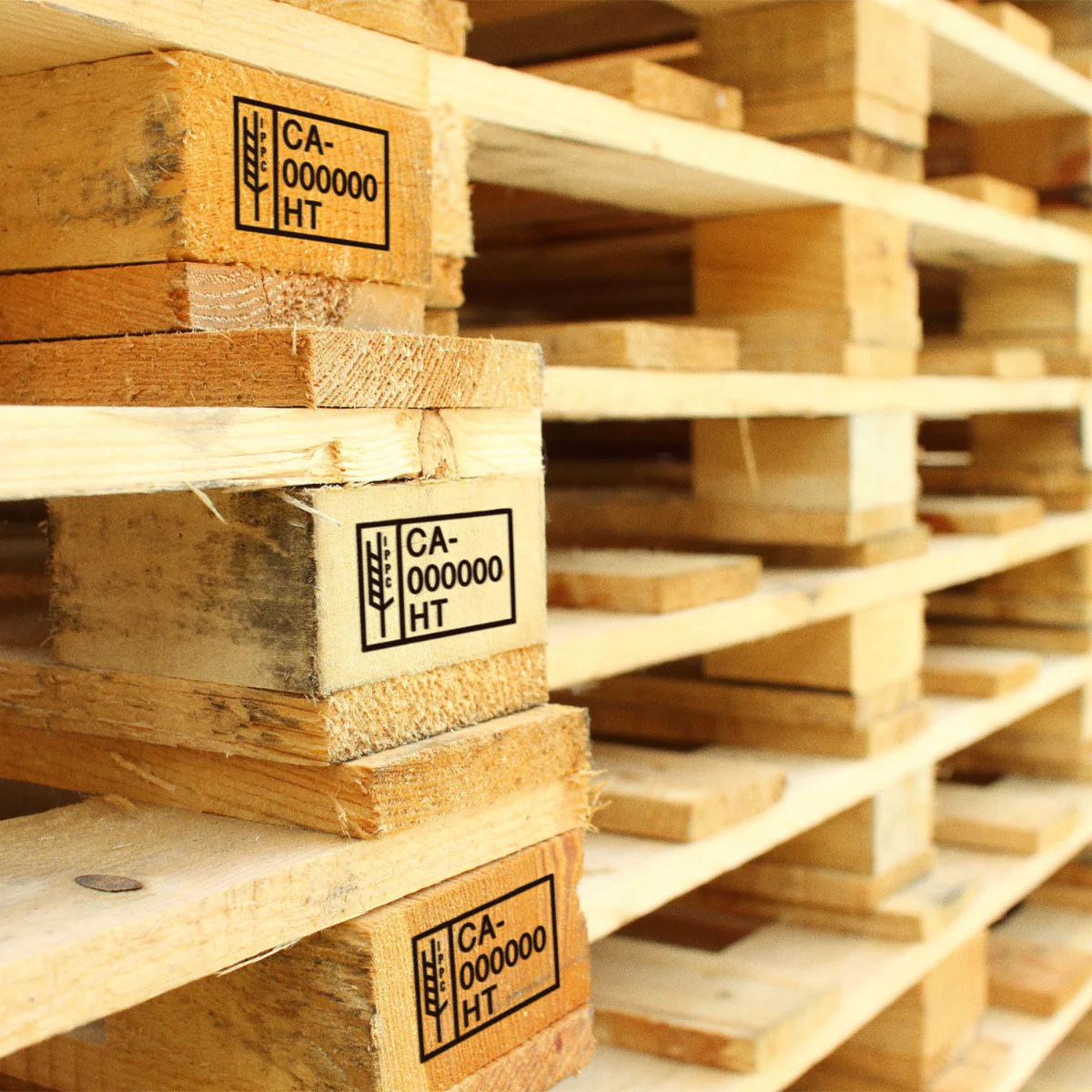
Solutions for secondary and tertiary packaging
Direct printing on the pack, label print-and-apply, automatic logistics labeling.
5800, 5940 G, Valvejet 4500 and 4700, the 2200 series, 2200 Pallet and CimPak.
Alphanumeric information and symbologies suited to the application, depending on the equipment and the verification requirements.
Integration of coding with ERP, MES, WMS and CoLOS® software in compatible configurations.
Controlling information along the supply chain
Formats and data can be managed centrally, depending on the software architecture.
Reference changes through controlled message selection, without pre-printing every case variant.
Codes can be read and, where necessary, assessed through appropriate inspection systems.
Case and pallet identifiers can be correlated with production orders, batches and shipments.
Choose by process stage
Direct printing of texts, batches, references and codes on board, or applying a label when the substrate or commercial requirements call for it.
See the solutionsIdentifying units that hold several products, with codes and information relevant to production and distribution.
See the solutionsPrinting and applying labels with logistics identifiers, including SSCC, with attention to positioning and scanning.
See the solutionsCombining several technologies and data-management software for products, cases and pallets in the same process.
See the solutionsTechnical and economic comparison
Direct printing on board
No separate adhesive carrier. Relevant on corrugated board compatible with the ink and with the contrast, size and scanning requirements. Benefits: eliminating the label cost for information printed directly, fewer pre-printed cases, late-stage customization. To check: board quality and color, texture, flatness, code readability.
Print & Apply on cases
When a predictable print surface is needed, the board is printed/colored, or the process requires labels. Benefits: good legibility on correctly chosen labels, flexible positioning, adaptation to different materials. To check: adhesive, resistance, size, roll direction, print technology, speed and application clearance.
Automatic pallet labeling
Creating and applying identifiers on one, two or (depending on the model) more faces, at the end of palletizing lines and in warehouses. To check: unique SSCC, pallet type, label size, position, film integrity and read-after-apply.
The Imark Sistem recommendation
Industrial equipment for cases and pallets
The Markem-Imaje range
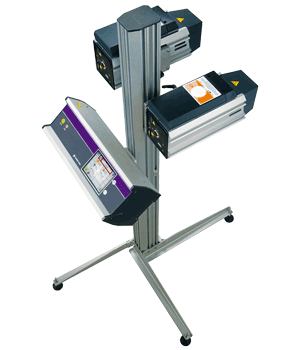
Piezo / LCIJ · Touch Dry® · direct coding
Direct case marking through piezo drop-on-demand technology and Touch Dry® hot-melt inks that solidify quickly on the right substrate, for well-defined characters and codes. For medium-duty applications: texts, logos, variable data and barcodes.
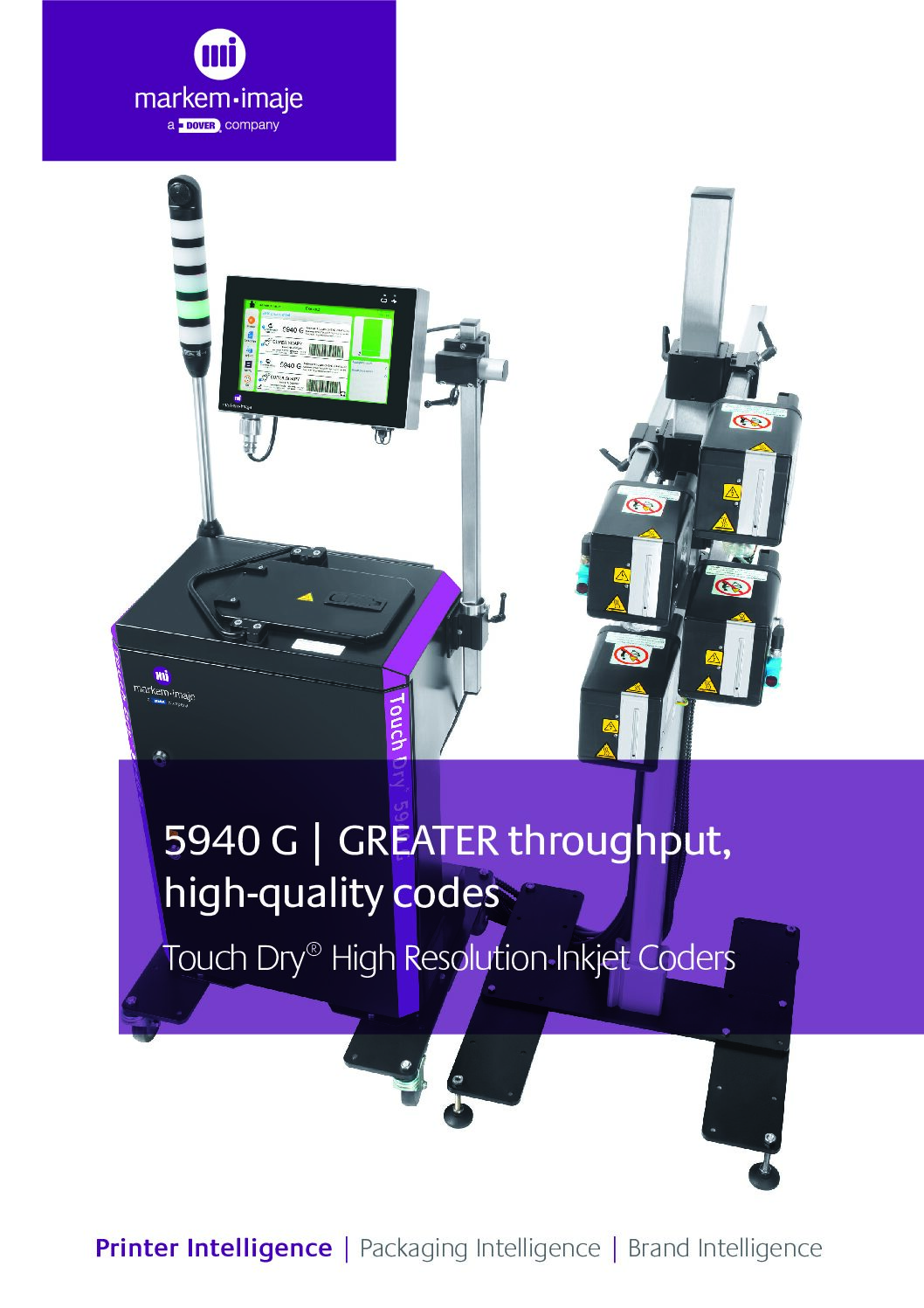
Piezo / LCIJ · Touch Dry® · high productivity
For high volumes: high-contrast Touch Dry® codes and the Intelli’Flow™ system that limits dust and ink build-up at the printhead. A multi-head platform for different zones of the case or extended messages.
The Markem-Imaje range
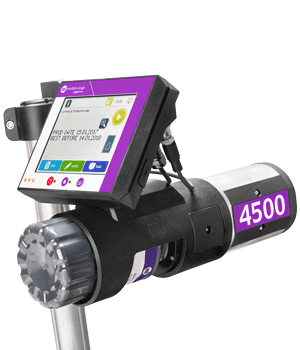
Valvejet · DOD · large characters
Non-contact valve-jet printing for large alphanumeric messages on compatible cases and packaging: batches, references, destinations, information that is easy to recognize visually. NOT recommended by default for small 2D codes or high-resolution verification requirements.
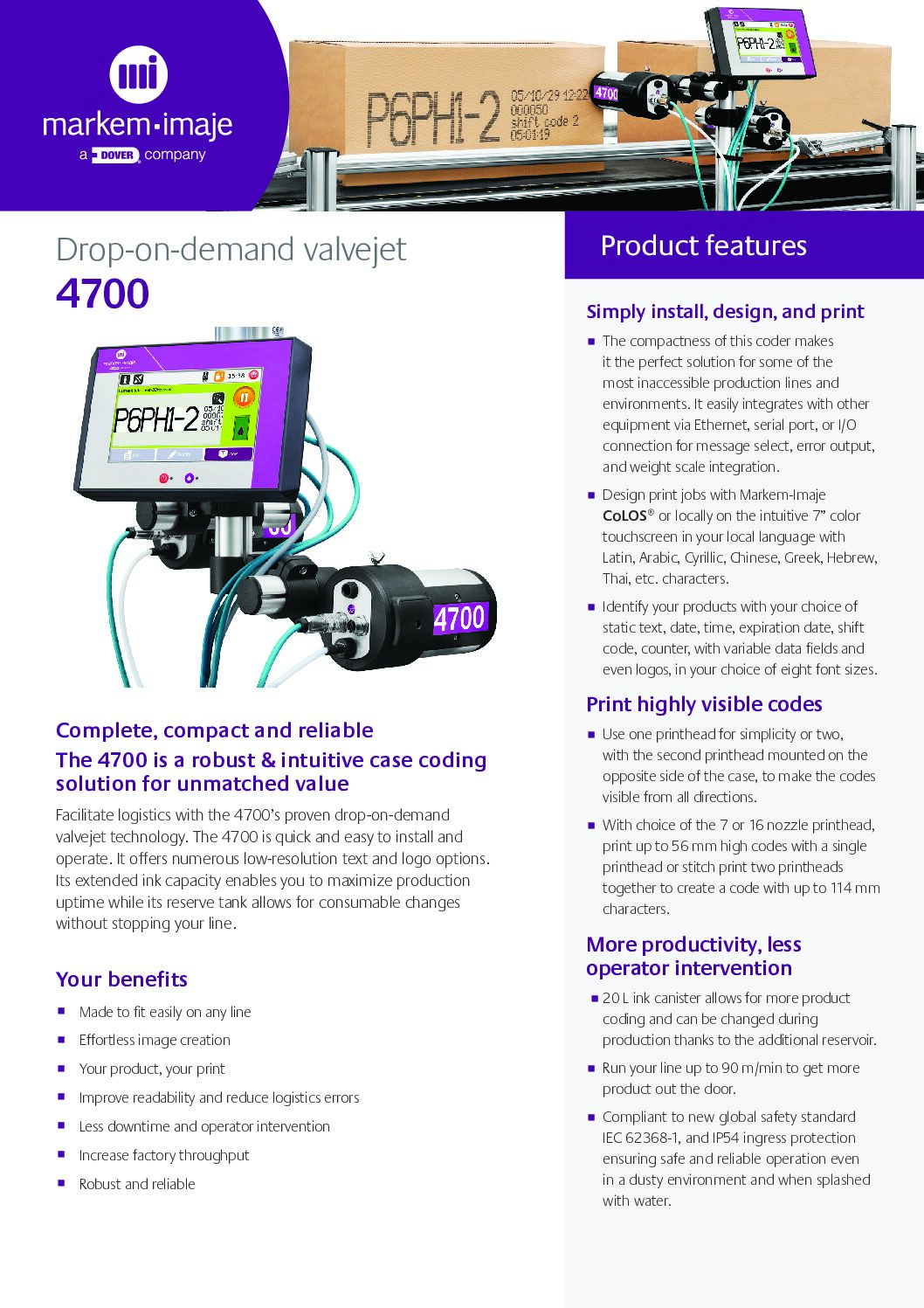
Valvejet · robust industrial marking
Extends the Valvejet family to applications that require non-contact coding on varied materials and products, with large alphanumeric messages in packing and handling processes. Depending on the ink and configuration, it can be assessed for cases, certain films, containers and components.
The Markem-Imaje range
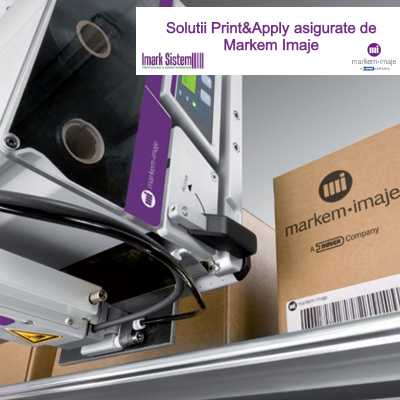
Print & Apply · case and multipack labeling
Thermal label printing + application mechanisms adapted to format and position. Top, side, front and corner applicators; the eTouch-S® applicator with SoftTouch controls the motion and monitors application. Thermal transfer or direct thermal, depending on the label and the intended lifetime.
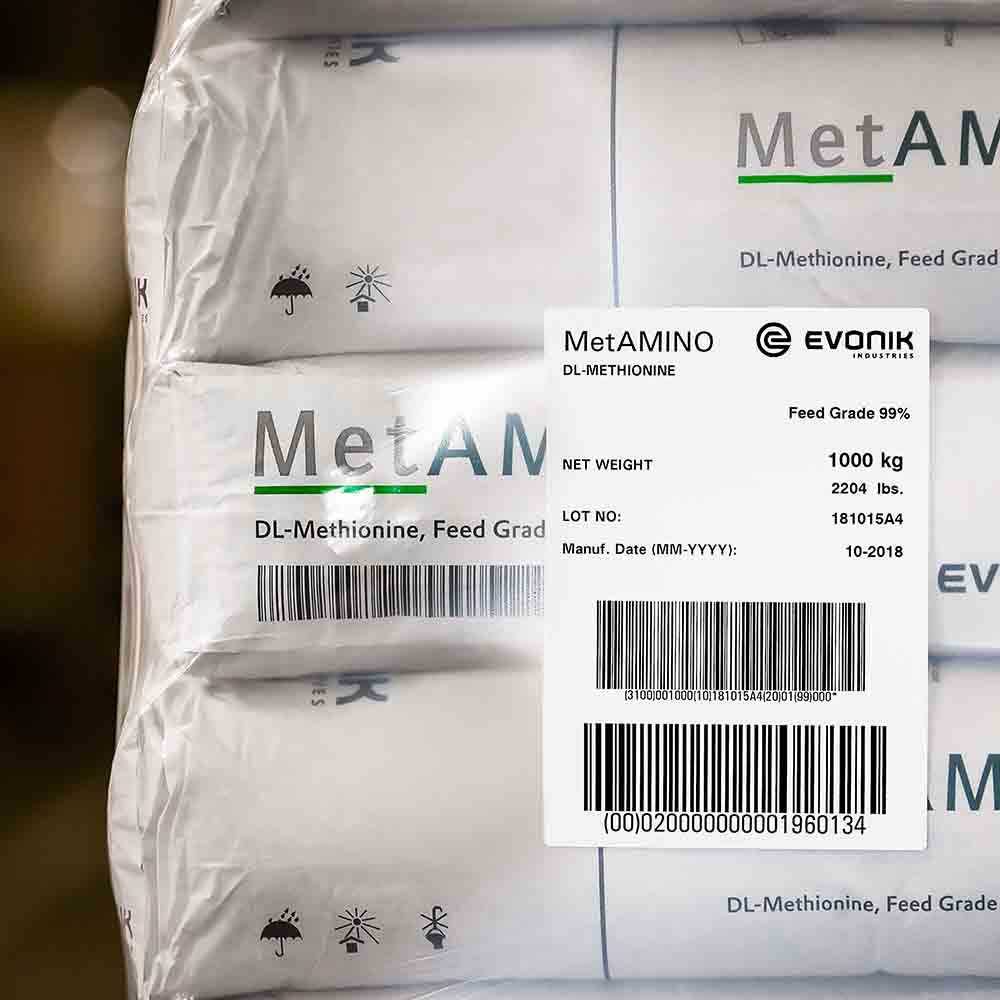
Print & Apply · pallets · GS1 identification
Printing and applying labels on pallets, on a single face or on two adjacent faces, for repeatable code positioning. Through CoLOS® and compatible databases, the label is generated with the information sent by production and palletizing.

Print & Apply · demanding logistics applications
A solution for printing and applying labels on pallets, for demanding production and storage environments. Application on the front face, side and, where applicable, the rear. Detection devices handle variations in load position and geometry.
High-resolution direct marking
For secondary packaging, this enables late-stage customization: generic cases receive variable information at the moment of packing, instead of a separate inventory of pre-printed cases for each item or market.

GS1-128, QR or Data Matrix in compatible configurations — verified against the application requirements.
Customizing at the last relevant point reduces the board variants in stock and increases flexibility across SKUs.
Touch Dry® inks are chosen according to substrate, color, storage conditions and code performance.
Single- or multi-head configurations, adapted to the print positions, the conveyor and the case geometry.
DOD Valvejet | visual identification
Unlike high-resolution piezo Touch Dry® systems, Valvejet equipment is geared toward simpler, robust marking; selecting it takes the desired level of detail into account.
Automatic in-line labeling
For cases moving toward a defined application point, with conveyor–applicator synchronization.
Positioning the label on one of the sides, adjusting the distance to the product.
When the top surface is available and suitable for reading and handling.
The label distributed across two adjacent faces, in configurations designed for this operation.
Mechanisms such as eTouch-S® control the applicator motion, to protect the product and ensure repeatable positioning.
Reading systems can confirm the code or the presence of the label, depending on the architecture.
Standardized logistics labeling
For pallets, labeling two faces with the same information is recommended, where the application allows, so that the identifier remains accessible for scanning.
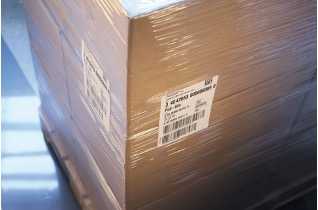
18 digits, represented with application identifier (00). Each logistics unit receives a unique, properly managed SSCC.
The GTIN identifies the trade item; the SSCC identifies the individual logistics unit. The case, the multipack and the pallet may have different identifiers.
A symbology that represents structured data through GS1 application identifiers. It is not a product number and must not be confused with SSCC or GTIN.
Traceability and aggregation
Manufacturing data, the batch and the trade identifier are generated or retrieved according to the process.
The case receives the information suited to its contents and its destination in the supply chain.
In applications that require it, the system correlates product units with the case or multipack.
The system records the composition of the pallet and generates or retrieves its SSCC.
The Print & Apply equipment prints and applies the label with the associated logistics information.
Reading the code can validate the existence and the consistency of the data with the logistics unit.
The identifiers are used in the documents and electronic messages that manage receipt, transport and distribution.
Readable codes and correct data
Inspection systems confirm that a code or a label is on the case or pallet, in the intended zone.
An industrial reader decodes the information and allows comparison with the data expected for the product, batch or shipment.
For compliance requirements, codes are checked through the relevant methodology and equipment, not just through an occasional scan.
Flagging a missing label, an unreadable code or a data mismatch, with stop, rerouting or relabeling.
Compatibility and in-service performance
Hot-melt formulations for compatible piezo systems; selected by contrast, board type and production conditions.
Consumables for large characters, chosen by material and application; compatibility is confirmed per equipment and substrate.
Paper or synthetic materials, with adhesives suited to the board, the finish and the temperature conditions.
Formats and adhesives for board or stretch film, with assessment of peel resistance and legibility after transport.
Formulations compatible with the material and the intended lifetime; direct thermal can eliminate the ribbon, with durability limits.
Consumables are chosen together with the equipment and the substrate, with tests where necessary.
Centralized management of coding
Creating and distributing formats in a controlled way for each item, pack and line.
Retrieving information from ERP, MES and compatible databases.
Associating information about cases and pallets with production and shipping.
Comparing printed identifiers with the expected information, to reduce errors.
Starting from one line and developing toward several coding points.
Coding connected with the production and logistics infrastructure.
Discover the softwareSolutions for different industrial flows
Product, batch and logistics identifiers. Solutions can combine direct printing and automatic labeling for items with high turnover and varied product mixes.
Followed by identification of shipping pallets. Integration is matched to speed and the available space at the end of the line.
Late-stage case customization can simplify the stock of pre-printed board.
Serialization and aggregation requirements are analyzed separately from the simple identification of the case.
Durable labels, messages visible from a distance and application configurations adapted to the industrial environment.
Codes for sorting and SSCC identifiers, integrated with warehouse management systems.
The equipment is assessed against the customer-specific standards and requirements.
Applications documented by the manufacturer
Sabarot · 2200 + CoLOS®
A study published by Markem-Imaje: Sabarot used Print & Apply equipment from the 2200 series and the CoLOS® software to organize case labeling.
Download the Sabarot studyTouch Dry® · 5940 G
The official 5940 G materials show codes applied directly on board, with variable messages and graphic elements.
Download the 5940 G datasheet2200 Print & Apply series
Synchronizing label printing with the pack in process and selecting the application mechanisms according to position.
Download the 2200 datasheetGuides and information for the technical decision
Using generic cases and customizing at the final stage can reduce the number of pre-printed packaging variants and offer more flexible stock management.
See the articles in the News sectionThe eTouch-S® applicator technology, developed for motion monitoring and label application in compatible industrial configurations.
See the articles in the News sectionMeasurable economic efficiency
Ink, label and ribbon have a different impact depending on print density and format.
Consumable change times, interventions and message configuration influence the availability of the installation.
Conveyors, sensors, automation, reading systems and connectivity enter the assessment.
Wrong labels, unreadable codes and relabeling generate losses in production and logistics.
Customizing generic cases at the final stage can change the stock requirement.
The LCIJ / Valvejet / Print & Apply comparison is made on the real message, the actual material and the number of units.
The Imark evaluation methodology
Corrugated board, treated board, stretch film, a printed case or another substrate.
Case, multipack, tray, pallet or several levels within a single flow.
Text, 1D/2D codes, GTIN, batch, SSCC and partner requirements, as applicable.
Cases per minute, pallets per hour, speed variation and available time.
Conveyor dimensions, case guiding, code position and access for maintenance.
The amount of ink or the number of labels, the changes and the intended lifetime.
Print trial, code validation, connectivity and operator training.
International technology, local integration
We analyze the material, the production rhythm, the dimensions and the required information before recommending the technology.
We compare direct Touch Dry® printing, Valvejet coding, label printing and dedicated pallet solutions.
Connecting with conveyors, sensors, PLCs and ERP, MES or WMS applications, depending on the project.
The reading, verification and data-correlation requirements, not just the printed look of the code.
Consumable selection and preventive maintenance, as part of long-term operation.
Each shipped unit receives the right information, usable in the next stage.
Technical answers for an informed decision
Direct printing applies the ink to the board, with no separate label. Print & Apply prints the information on a self-adhesive label and applies it automatically. The choice depends on the material, the required code quality, speed, cost and identification requirements.
For high-resolution coding — piezo Touch Dry® 5800 and 5940 G. For simple alphanumeric messages — Valvejet. For situations that require labels — the 2200 series.
Yes, through equipment and configurations able to generate the required symbology and quality. The material, contrast, dimensions and verification of the result are assessed for the application.
A Markem-Imaje hot-melt inkjet printing technology, in compatible piezo equipment. The ink solidifies quickly after application on the right material, for well-defined outlines.
Both are drop-on-demand, but with different mechanisms and consumables. Piezo Touch Dry® targets high-resolution printing; Valvejet is oriented toward large characters and simple messages.
Yes, with compatible printers. The module size, contrast, data structure and quality are verified at the effective line speed.
A system that combines the automatic printing of the label with its application on the product or pack. It can use thermal transfer or direct thermal and application mechanisms chosen by surface and position.
Yes. Models such as Markem-Imaje 2200 Pallet are designed for one or two adjacent faces. Other systems may offer additional options.
The unique identifier of a logistics unit in GS1. It has 18 digits and is represented through application identifier (00). It must not be confused with GTIN, which identifies the trade item.
No. GS1-128 is a barcode symbology that can encode GS1 identifiers. SSCC is the key that identifies the individual logistics unit.
The GS1 guideline specifies positioning rules, typically 400–800 mm from the base and at least 50 mm from the edge. The configuration is adapted to the height, geometry and operational requirements.
The GS1 guideline recommends two faces for scanning accessibility, but the concrete rules are assessed with the logistics partner and the process.
Yes, when the lifetime and conditions are compatible. For long or demanding uses, thermal transfer can offer greater resistance, depending on the label and the ribbon.
Yes, with the right material and adhesive. Texture, film tension, temperature and handling influence adhesion.
By correlating the identifier with the data from production/storage and by integrating reading or verification. The equipment alone does not validate all the information in the system.
Yes, depending on the model, software and interfaces. CoLOS® and other compatible integrations can manage messages and transfer data between industrial systems.
No. The total cost depends on volume, marking density, consumables, maintenance, code quality and changeovers. The comparison is made on the real application.
By the line volume and speed, the number of heads, the integration requirements and the desired autonomy. Imark Sistem can compare the two configurations starting from the real message and substrate.
Send the type of cases/pallets, photos of the packaging, the line speed, the information to be printed, the size and position of the code and any GS1 requirements. An initial assessment can be made on this basis.
Connected technologies in the same plant
Applicators, Print & Apply, thermal printers and consumables for different packaging levels.
DiscoverMarking technologies for board, glass, plastic, film and other surfaces.
DiscoverIntegrating two-dimensional codes into identification and traceability processes.
DiscoverSystems for reading, capturing and verifying codes in production and logistics.
DiscoverCorrelating identifiers with physical movements and supply-chain information.
DiscoverMessage management and data integration between equipment and company systems.
DiscoverTechnical consulting for secondary and tertiary packaging
Material, format, code position, speed and the information to be printed.
A comparison between direct printing, Valvejet and Print & Apply.
Connecting with the current flow and assessing the available technical services.
Phone: +40 21 255 71 74 · E-mail: office@imarke.ro