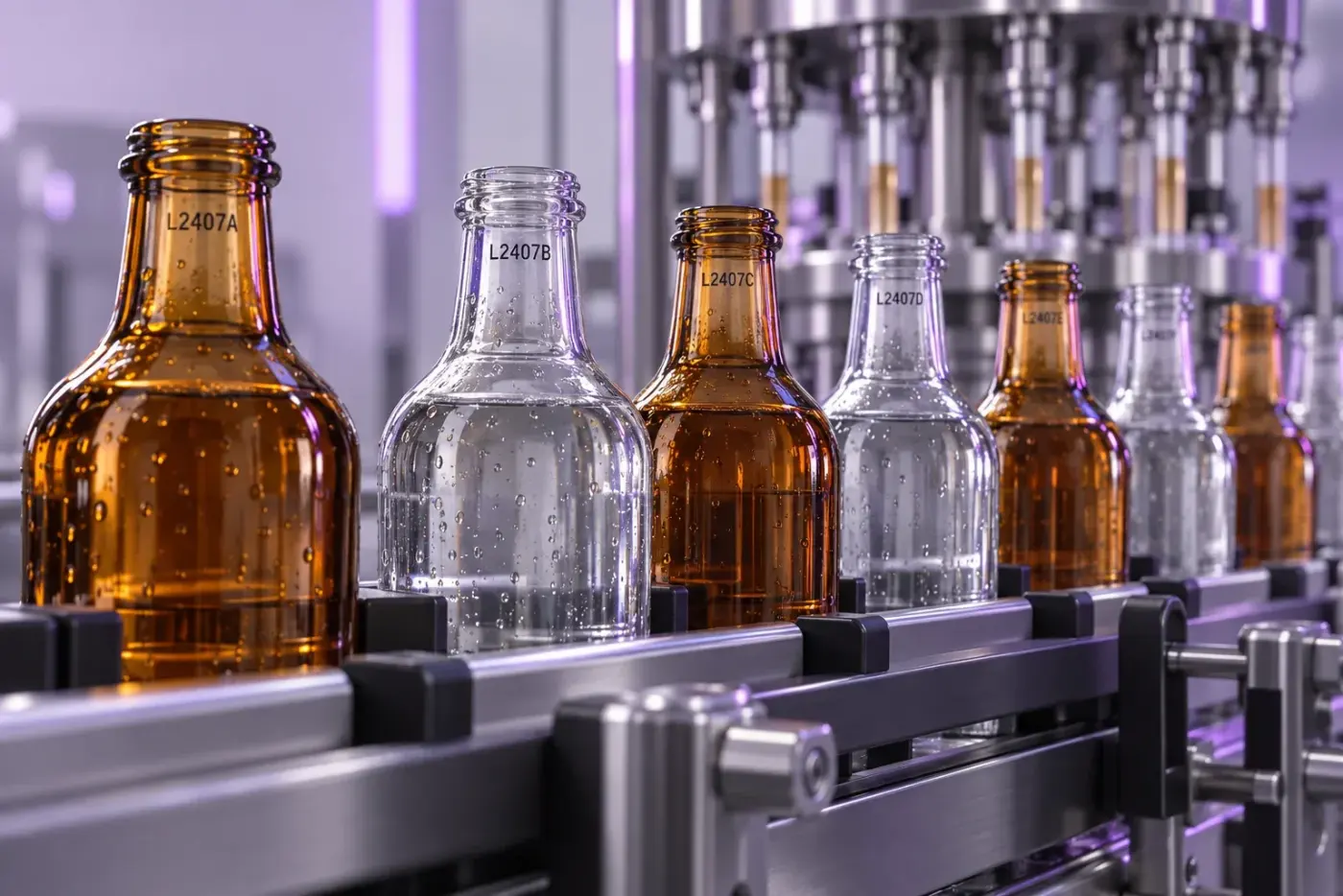
3 laser technologies
CO₂, Fiber and UV, to match the marking to material, contrast and production conditions.
Cookies on imarke.ro
We use cookies the site and its forms need to work. Only with your consent do we use Google Analytics, to see which pages are visited, and Google Ads, to measure which ads bring quote requests. Cookie policy · Privacy
Marcare & trasabilitate
Etichetare & ambalare
Siguranță și conformitate
Transport & manipulare
Markem-Imaje technology · Industrial marking and coding
Precision on every mark, performance at production speed. SmartLase® systems by Markem-Imaje use CO₂, Fiber and UV laser technologies to print data, batches, 1D and 2D codes and variable identifiers without ink, directly onto compatible products and packaging.
From bottling and food packaging to pharmaceuticals, automotive and industrial components, the SmartLase range covers different materials and requirements. Imark Sistem supports you in choosing and integrating the solution: technical analysis, technology selection, line integration, protection and extraction, software connectivity and support.
Performance in industrial applications
CO₂, Fiber and UV, to match the marking to material, contrast and production conditions.
Marking is created by the beam interacting with the material, without conventional printing consumables.
Maximum stated capacity for certain SmartLase models and configurations, depending on the application.
Variable information and codes for identification, control and traceability systems.
Precise identification. Controlled productivity.
Laser technology addresses these challenges through a digital, ink-free process that creates durable marks by controlled modification of the surface: removal of a superficial layer, engraving, colour change or other specific interactions, depending on substrate and technology.
The Imark Sistem approach
We analyse the material, the behaviour of the mark, the available time, the code size, the working distance and the safety requirements. On this basis we identify the right configuration and assess integration with the production infrastructure.
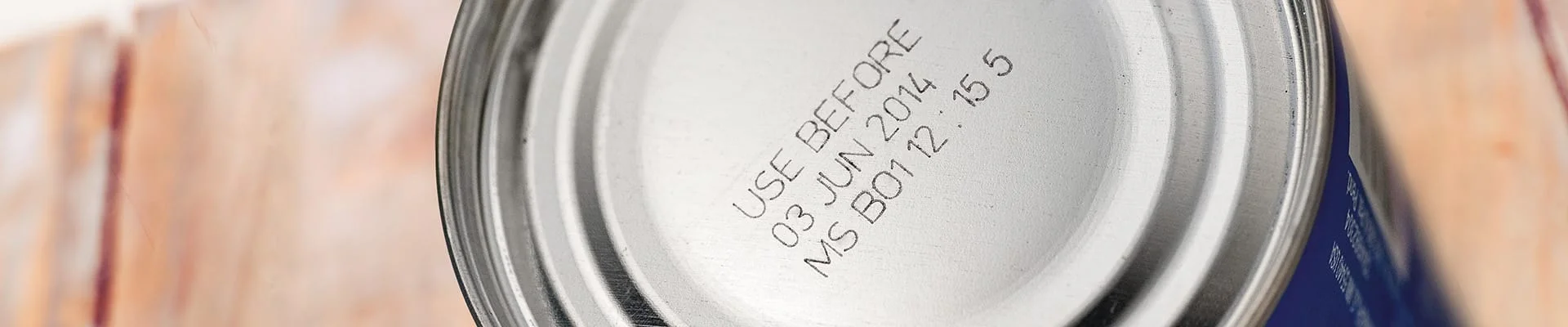
The mark can become part of the surface, resistant to handling and to the conditions it was validated for.
Systems designed for automated lines, including high-speed applications and complex messages.
No ink, additive or ribbon: simpler supply and administration.
Messages are managed through local interfaces and compatible software, for efficient information handling.
In suitable applications, the absence of consumables and extended operation intervals can deliver a competitive cost per mark.
Prints variable information and legible codes for identification and verification systems, on compatible materials.
CO₂ · Fiber · UV
Coding of food packaging, labels, printed cardboard, glass and certain plastics or laminates, through controlled modification of the material. Important where speed, legibility and the elimination of consumables matter.
Materials: cardboard, paper, glass, PET, compatible films · Equipment: C150/C350/C340/C350 BOU/HD/C600/BOU/X-WIDE
Permanent, high-contrast marks on metals, metallised surfaces and rigid plastics that respond to its wavelength: metal containers and caps, technical components, metallised packaging.
Materials: aluminium, treated/anodised metals, rigid plastics · Equipment: SmartLase F250
Short wavelength, with photochemical interaction and reduced heat transfer: suitable for heat-sensitive materials, monomaterial films, caps, containers and glass.
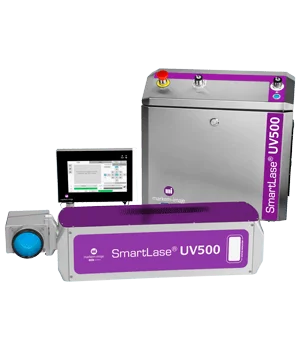
Materials: HDPE, LDPE, PE, PP, ABS, polycarbonate, glass, recyclable films · Equipment: SmartLase UV500
Non-contact marking technology
The system receives the message to mark: date, batch, series, identifier, 1D or 2D code, from the operator or a compatible software application.
Sensors identify the product position, and the control system synchronises marking with the line movement.
The optical system directs the beam to the marking area, according to the configured geometry and parameters.
The laser energy interacts with the material, generating characters, symbols and codes. The result depends on material, wavelength, energy, focus and speed.
For applications with automatic control, the mark can be verified by a compatible vision or reading system.
Controlled removal of a superficial layer.
Local modification or removal of material to produce the mark.
Local modification of the structure of certain plastics, which can generate contrast.
Visual modification of the material through interaction with laser energy.
Controlled tracing of shapes and characters by moving the beam.
Solutions for real production requirements
Marking containers and labels at high speeds: precise synchronisation, legible codes and integration into the available space.
To evaluate: SmartLase C350 BOU · C600 BOU
Code quality without compromising film integrity; technology selection and energy tuning avoid damage.
To evaluate: SmartLase C350 · C600 · UV500
Contrast and durability for product identification under the intended conditions of use.
To evaluate: SmartLase F250 · UV500
Simultaneous marking of several packs: extended surface and synchronisation with the process.
To evaluate: SmartLase C350 HD/HD Plus · C600 X-WIDE
Complex identifiers and Data Matrix or QR codes, with requirements for size, contrast and reading.
To evaluate: SmartLase F250 · C600 · UV500
At high volumes, eliminating printing consumables simplifies operations and reduces recurring costs.
Evaluation of the laser technology suited to the substrate and process
Technology for industrial efficiency
Markem-Imaje’s patented tracing optimises character formation; in documented configurations it can code up to 30% faster than certain conventional vector systems.
Cooling solutions manage thermal load in intensive cycles, reducing the risk of overheating and supporting availability.
Compatible software platforms manage and distribute messages and integrate with the factory’s digital infrastructure.
Advanced models offer communication options for integration with control systems and industrial applications.
The architecture eases access to components and deployment across different line configurations.
Galvanometer mirror optics direct the beam for fast, precise marks, including complex codes.
Markem-Imaje portfolio
CO₂ laser · versatile coding
Permanent codes on a variety of packaging. C150 (10 W) for lower speeds, C350 (30 W) for lines with higher demands. Intelli’Arc® for efficient tracing and clear characters, including variable messages.
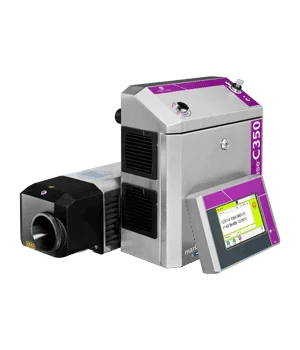
CO₂ laser · all-in-one
Basic coding on packaging, a compact and economical solution. CO₂ 30 W, complete configuration with adjustable stand, sensors and a dedicated fume extractor; simplified installation.
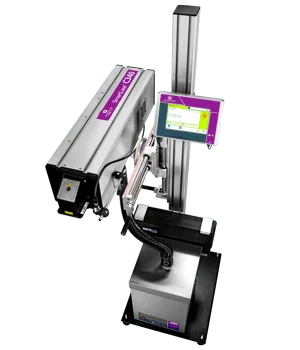
CO₂ laser · integration in difficult spaces
A Beam Orientation Unit (BOU) positions the head in hard-to-reach areas without disproportionate changes to the machine. CO₂ 30 W. In documented configurations, up to 45,000 bottles per hour.
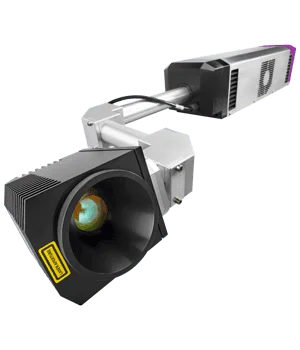
CO₂ laser · multi-line and wide web
Printing codes on extended surfaces, with multiple coordinated laser sources for simultaneous marking of several packs. HD Plus: two 30 W sources cover 670 mm, three sources up to 1,005 mm. Also controlled scoring applications.
CO₂ laser · advanced performance
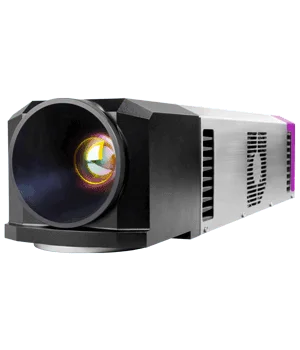
A 60 W CO₂ platform for high-speed, complex applications. High-speed tracing algorithms and optics, 1D/2D codes, a 10.1″ touchscreen, industrial connectivity and CoLOS®.
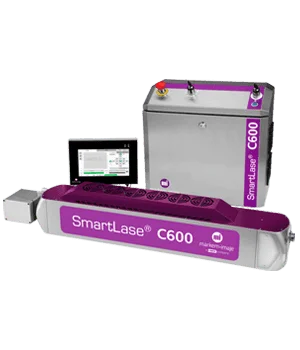
CO₂ laser 60 W · flexible orientation
The 60 W CO₂ platform with flexible beam orientation for installations where conventional placement is difficult. Optical segments and bends direct the beam; the main unit stays accessible. Up to 150,000 products per hour.
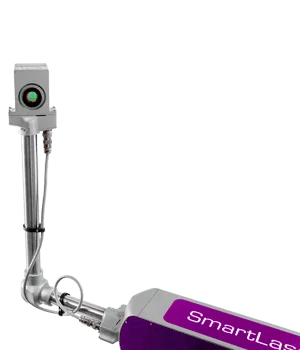
CO₂ laser · extended surfaces · multi-line
The X-WIDE optical head extends the marking field up to 820 × 500 mm, for marking several packs in a single operation, on wide films or in a matrix. Two 60 W systems can cover about 1.6 m width. CoLOS® integration.
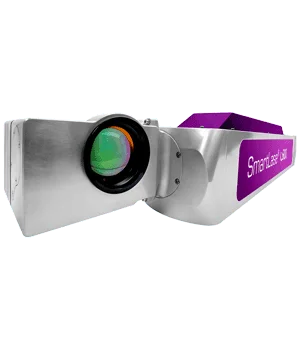
Fiber laser · metals and rigid materials
A 20 W Fiber system for high-precision coding on dense materials and compatible surfaces: metal containers and caps, technical components, rigid plastics, metallised packaging. 1D/2D codes for traceability.
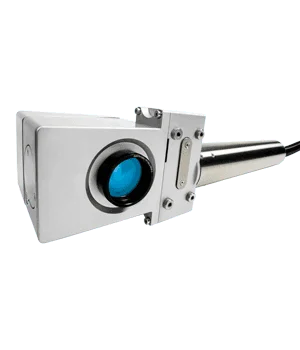
UV laser 5 W · delicate materials
A 5 W UV laser (355 nm) for precise codes on sensitive materials or ones hard to mark with other technologies, with reduced heat transfer. Variable information, small characters and complex 2D codes.
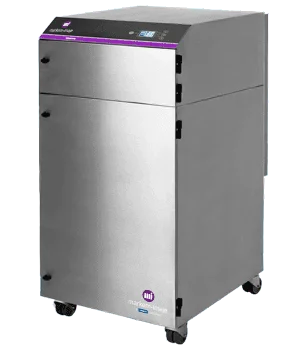
Operator protection · extraction and filtering
Capture and filtering of fumes, vapours, gases and particles generated during laser marking. They protect operators and optical components and reduce deposits in the marking area. Depending on the model: particle+gas filtering, filter monitoring, flow control.
The choice of equipment depends on material, line speed, the code required, the installation space and the safety requirements. We help you compare CO₂, Fiber and UV technologies and identify the right configuration.
Technology selection
SmartLase C340 — all-in-one, basic coding and simplified integration.
SmartLase C150/C350 — adaptable to different speeds and materials.
SmartLase C350 BOU / C600 BOU — beam orientation in difficult areas.
SmartLase C600 — 60 W CO₂ platform, advanced control and connectivity.
SmartLase C350 HD/HD Plus / C600 X-WIDE — extended coverage and matrix coding.
SmartLase F250 — Fiber 20 W for precise marks.
Material compatibility
Bottles, containers and certain PET packaging, with integrity checks on thin containers.
Caps, bottles, containers and components; depending on composition and colour, Fiber or UV solutions.
Data and codes on glass containers or components; for detail and sensitivity, UV technology is relevant.
Metal containers, caps and components, including treated or anodised ones; often with Fiber laser.
Controlled interaction with the superficial layer or pre-printed ink; CO₂ is efficient on printed cardboard.
Flexible packaging, with attention to film thickness, the printed layer and the risk of damage.
Continuous marking on cable sheaths, pipes and profiles, depending on composition.
Identification of products and batches on metal or polymer components.
Variable information and digital identification
Information to identify the date of manufacture and the best-before date.
Linking products to batches and manufacturing intervals, for traceability.
Individualised information, when each product needs a distinct identifier.
Compatible linear symbologies, with checks on size and quality against the scanning system.
QR, Data Matrix and other symbologies accepted by the equipment configuration.
Symbols, pictograms or graphics, within the limits of resolution, contrast and available surface.
Solutions for different industrial sectors
Correct coding supports batch identification, best-before management and traceability. Laser integrates for variable information on certain cardboard, film, container and laminate packaging, with attention to material integrity and food safety.
Variable information on compatible packaging, updated after production.
1D/2D codes for internal records and verification.
Cardboard, films, containers and laminates, with technology chosen by structure.
High volumes and precise synchronisation of coding with the flow of containers. Marking on PET bottles, labels, glass and caps may require different technologies; BOU systems are relevant in limited integration spaces.
Synchronising the code with the flow of containers at high volumes.
BOU systems orient the beam into difficult areas.
PET, labels, glass and caps, by material and position.
Compact codes, individual identifiers and strict requirements for legibility and verification. Laser is evaluated for compatible packaging, blisters, containers and medical components; in regulated applications, verification and data integration follow the process requirements.
Data Matrix and identifiers in small spaces, with verification.
Mark control for regulated requirements.
Individual identifiers for unit-level tracking.
Packaging is part of the product identity. Coding provides the required information without unduly affecting the appearance or integrity of the container: discreet, precise marks on containers, caps, labels and decorative packaging.
On containers and caps, without affecting the design.
Technologies suited to special finishes.
Batches and codes on compatible materials.
Components may require durable marks for batch identification, operation tracking and quality control. Depending on material, laser generates identifiers on metal or polymer components or on treated surfaces.
On metals and treated surfaces, resistant in process.
For operation tracking and quality control.
Data Matrix on components, with verification.
Identification is done on moving materials and may require repeating the mark at set intervals. Technology selection depends on composition, line speed, contrast and the durability of the mark.
On moving cable sheaths, pipes and profiles.
Mark repeated at preset distances.
Contrast and durability after testing.
Safety is part of the project
Screens, enclosures and protective devices to limit accidental exposure, including hazardous reflections.
Interlock devices and stop circuits integrated into the machine safety system.
Capture and filtering of particles and emissions, depending on material and risk assessment.
Managing deposits that can affect optical components, through extraction and maintenance.
Configuration established by application, laser class, operator access and safety requirements.
Safe operation requires trained personnel and adherence to the equipment-specific procedures.
Long-term economic efficiency
The equipment, optics, accessories, protection systems and integration.
The electrical power of the laser source, controller and auxiliary equipment.
The cost of emission-capture systems and filter maintenance.
Periodic checks, optics cleaning and any interventions.
The effects of maintenance and stoppages on productivity.
The ratio between operating costs and the number of products marked.
The Imark Sistem recommendation
Integration into the digital factory
Organising print formats and distributing them to compatible equipment.
Controlled data transmission limits repetitive information entry.
Connecting to planning and production-management applications, depending on architecture.
Information on equipment operation, for operation and timely interventions.
Combining coding with identification and verification to track products between stages.
Reusable formats reduce errors when changing products and keep marks consistent across lines.
The future of product identification
What to verify before implementation


The images illustrate possibilities of identification and are not a guarantee that any material or code can be marked with the same technology.
Technology in action
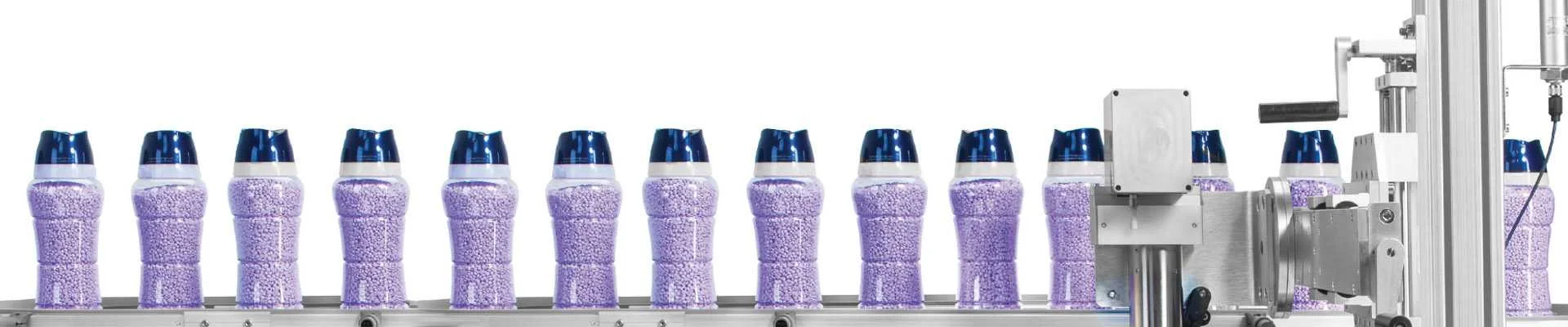
Marking moving products, with synchronisation of the code position and production parameters.
Coding films and laminated packaging, keeping material integrity.
Printing identification information on certain metal or polymer materials.
Technical expertise. Integrated industrial solutions.
We analyse the product, production rate and coding requirements before recommending equipment.
Access to an established portfolio of CO₂, Fiber and UV laser solutions.
We assess positioning, synchronisation, connectivity and the technical requirements of the process.
Integrating marking with identification, inspection and data management systems.
Installation, assistance and maintenance, under the contractual conditions and the configurations implemented.
We assess how the mark behaves on the real material and, where needed, recommend testing before settling the configuration.
Operational continuity
Configuring the equipment and verifying the marking and integration parameters.
The basic functions, operating procedures and system-specific restrictions.
Checking and cleaning optical components per approved procedures.
Checking the operation and status of filters, per recommendations and operating conditions.
Identifying technical issues and service by qualified personnel.
We supply the components needed, such as optics and filters, to keep the equipment in operation.
Essential technical information
A non-contact identification process in which a laser beam locally modifies the surface of the product or packaging to generate text, symbols and codes. Depending on material and technology, the mark results from ablation, engraving, colour change or other physical mechanisms.
CO₂ is common on packaging, printed cardboard, glass and compatible materials. Fiber suits metals, metallised surfaces and rigid plastics. UV allows precise marking of sensitive materials, with reduced heat transfer. The choice depends on substrate, contrast, speed and process requirements.
In many applications it is durable, because it results from modifying the surface. Durability depends on material, marking mechanism and conditions of use; for special requirements the result is validated through tests.
No, the process does not need ink, additives or ribbon to form the code. It does, however, have energy, maintenance and possible auxiliary protection and extraction costs.
Yes, many plastics can be marked with suitable laser technologies. Compatibility depends on composition, colour, finish, thickness and parameters; for sensitive materials, UV can be evaluated.
Yes, if the technology or parameters are not suitable. Excess energy can cause damage, deformation or perforation, especially on thin materials. That is why source selection and parameter validation are essential.
Yes, compatible SmartLase models can produce 2D codes. Quality is checked against size, contrast, material and the applicable standards.
Yes, the SmartLase range includes equipment for high productivity. Actual capacity depends on model, message size, material, number of characters and conditions.
In many applications, yes. The laser interacting with the material can generate particles, gases and vapours that must be captured. The need and sizing are established after assessing the application and risks.
Yes. Although it does not use conventional printing consumables, the equipment needs checks and maintenance per recommendations: optics, protections, filters and auxiliary components.
In many cases, yes. It depends on space, line speed, product type, working distance, electrical infrastructure and safety requirements. BOU models are designed for scenarios with limited space.
BOU stands for Beam Orientation Unit: directing the beam to the marking area through an optical path adapted to the installation geometry, useful when mounting space is restricted.
Fiber laser is commonly used for metals and metallised surfaces. In certain applications other technologies may be used, depending on material and mark requirements.
It can be, especially at high volumes, where eliminating consumables is an advantage. The comparison must include investment, energy, extraction, maintenance and cost per mark.
Depending on model and configuration, it can integrate with industrial software applications and the CoLOS® platform. The architecture and features are checked for each project.
The first step is evaluating the material, line speed, code content, installation conditions and the required durability. On that basis, Imark Sistem identifies the relevant solutions and recommends testing where needed.
Whether you are designing a new line, upgrading an existing system or considering switching from ink to laser, a preliminary technical evaluation helps you avoid an unsuitable investment. We analyse the material, speed, code size and integration conditions.
Technologies for the whole industrial process
Non-contact coding for a variety of materials and products, including high-speed lines.
DiscoverHigh-resolution thermal inkjet, for compatible packaging and materials.
DiscoverThermal transfer on flexible films and compatible packaging.
DiscoverReading, verifying and managing printed information.
DiscoverIntegrating coding equipment and managing identification information.
DiscoverMarking and coding applications adapted to industrial sectors.
DiscoverBefore choosing a laser system we establish not only which code you want, but how the mark must behave on the real material. We analyse the whole process for a configuration adapted to the technical, safety and economic requirements. Phone: +40 21 255 71 74.