
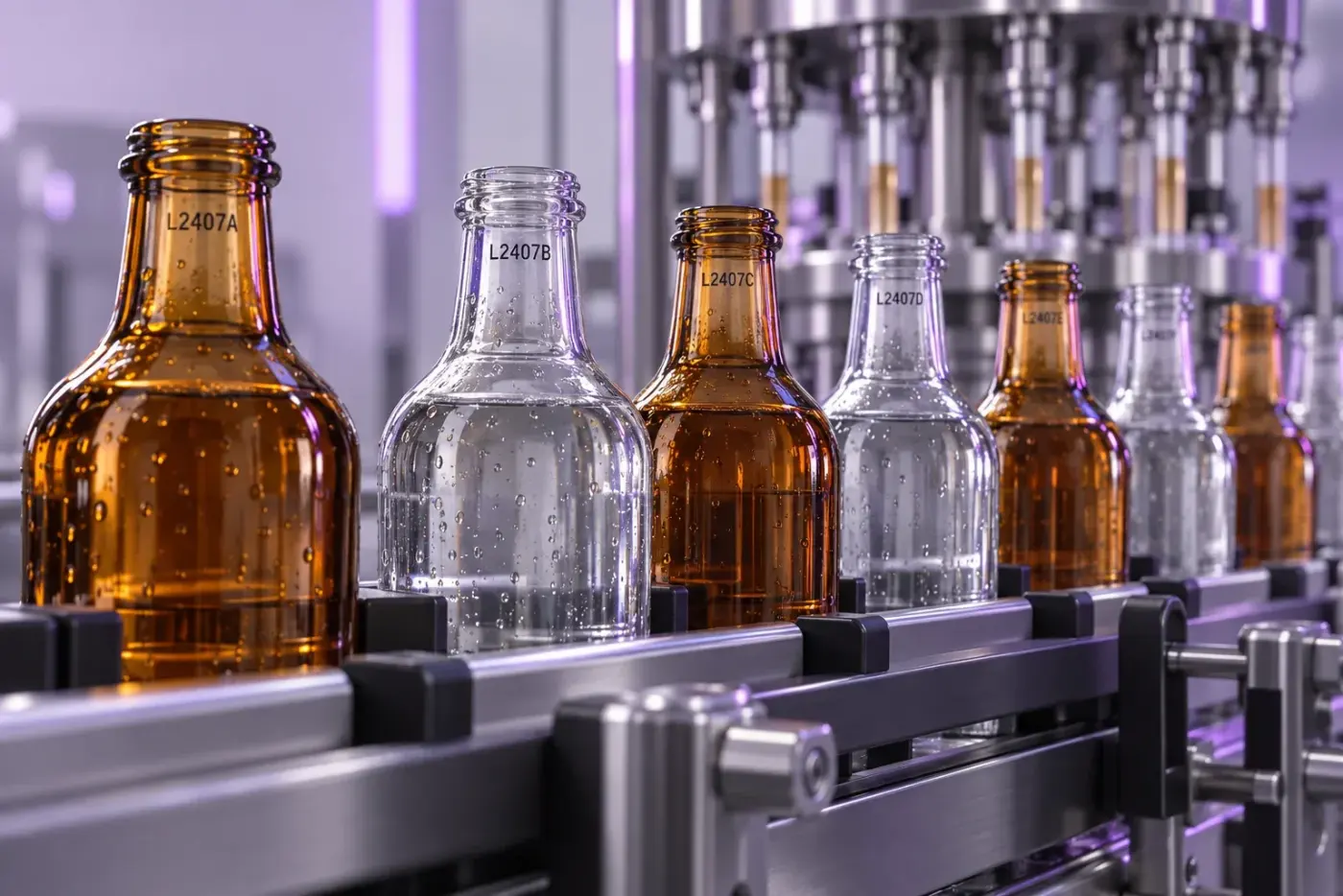

A fragment of metal, glass or bone that reaches a customer can mean a product recall, a lost contract with a retail chain and damage to your brand that lasts for years. Metal detectors and X-ray inspection systems prevent this, but they do not find the same things and they do not cost the same. This guide helps you choose: we start from the real risks of your product, not from a catalogue.

What does a foreign body reaching a customer cost you?
The cost of an incident is almost always higher than the price of the equipment that would have prevented it. With a foreign body complaint, you usually pay for several things at once:
- the batch recall: return transport, product destruction, sorting work;
- the customer relationship: retail chains may claim compensation, suspend the listing or ask for an extra audit;
- inspections by the authorities and the time they take;
- your brand image, especially when the incident reaches the press or social media.
On top of that, the food safety standards that retailers require, such as IFS Food and BRCGS Food Safety, ask you to identify and control the risk of physical contamination in your HACCP plan and to keep evidence that you do so. A detection system with records is, in most cases, how you show the auditor that the risk is under control.
What does a metal detector find, and what does X-ray find?

A metal detector finds only metals. An X-ray system finds any foreign body denser than the product: metal, but also glass, stone, calcified bone or some dense plastics. The practical difference:
| What you are looking for | Metal detector | X-ray inspection |
|---|---|---|
| Ferrous metals (iron, steel) | Yes | Yes |
| Non-ferrous metals (aluminium, copper) | Yes | Yes |
| Stainless steel | Yes, the hardest to detect | Yes |
| Glass, stone, calcified bone | No | Yes, depending on density and size |
| Products in aluminium trays or cans | Difficult | Yes |
| Missing items, broken products, fill level | No | Yes, if the application is configured for it |
Neither technology reliably finds materials with a density close to that of the product: wood, soft plastic, paper, hair. These are controlled through prevention measures in the factory, not at the end of the line.
When is a metal detector enough?
A metal detector is usually enough when the main risk in your HACCP analysis is metal: machine wear, broken screens, blades, screws, needles. It is also the more affordable investment. It suits:
- products in plastic, paper or cardboard packaging;
- bulk products, powders and granules in free fall;
- products pumped through pipelines: minced meat, sauces, pastes;
- lines where a detector can easily be added to the existing conveyor.
Wet, salty, chilled or frozen products create a “product effect” that can mask metal. For these, the detector technology matters: models that work on several frequencies reduce this effect. A test on your real product shows you what sensitivity you get.
When is X-ray inspection worth it?
X-ray is worth it when the risk is not only metal, or when the packaging gets in the way of a metal detector. Typical situations:
- products in jars or bottles, where the risk is glass;
- products with bones or stones: meat, fish, dried fruit, nuts;
- raw materials that can bring in stones: seeds, vegetables, cereals;
- products in aluminium trays, cans or metallised film;
- customers who explicitly ask for X-ray inspection or completeness checks.
An often overlooked advantage: the same X-ray system can also check whether a piece is missing, whether a product is broken or whether the fill level is correct. If you do these checks by hand today, that gain comes on top of food safety.

How do you choose? Four questions for your team
Put these questions to a meeting with quality, production and purchasing. The answers usually lead you straight to the solution:
- Which foreign bodies appear in your HACCP analysis and in complaints from recent years? If only metals appear, a detector may be enough.
- What packaging is the product in at the control point? Aluminium foil, a can or a glass jar changes the choice.
- What do your customers and auditors require? Some retailers explicitly ask for X-ray for certain categories.
- Which other checks do you do by hand today: piece count, fill level, broken products? If there are many, X-ray can take on these tasks too.
Always ask for a test with your product and with contaminant test samples. Detection performance depends on the product, the packaging and the line speed; a test tells you what you get in reality, not in the brochure.
How can Imark Sistem help?
Imark Sistem offers both technologies: CEIA metal detectors for conveyors, free fall and pipelines, and Wipotec X-ray inspection systems for packed products, bulk products or products in containers. Because we have both, we have no reason to push you towards one of them: we start from the product risk, test with your real product and recommend the option that makes sense. After installation, we provide service in Romania.
If you also need weight control, read our guide on the cost of overfilling and checkweighers. You can reach us at +40 21 255 71 74 or at office@imarke.ro.
Frequently asked questions about metal detectors and X-ray inspection
Do I need both systems?
Sometimes, yes: for example, a metal detector on the raw material and X-ray after packing. In most cases, however, a single well-chosen system, fitted at the right point on the line, covers the risk identified in your HACCP analysis.
Does X-ray affect the product?
The dose the product receives during inspection is very low, and the equipment is shielded to protect operators.
Can a metal detector inspect products in metallised film?
It depends on the detector technology and the film. Some detectors are designed for metallised packaging; for aluminium trays or cans, X-ray inspection is usually the right choice.
Where on the line should the detector go?
As close to the end as possible, after the last stage where contamination can occur, usually after packing. For bulk products, an early control point also protects downstream machinery. The exact position follows from your HACCP analysis.
What evidence do auditors ask for?
Usually: that the system works at the set sensitivity, that it is tested regularly with test samples, that rejected products are handled correctly and that records exist. Modern systems can keep part of this data automatically.