Bag-in-Box (BIB) is packaging made of a flexible bag with a tap, placed inside a corrugated cardboard box. You will find it with wine, juices, oils, syrups for restaurants or liquid egg for HoReCa. In this article you will learn how it protects the product, which bag and which closure to choose, which equipment makes up a bag-in-box line and what to prepare before requesting a quote.
What is bag-in-box packaging and what does it consist of?
Bag-in-Box (BIB) packaging consists of a bag with a tap, cap or valve and a corrugated cardboard box. The bag holds the product and isolates it from the environment, while the box protects it during transport, makes it easy to stack and carries the label information. That is why it is also called tap container packaging, or box-with-tap packaging.


For the plant, this means two separate materials: a bag that is filled on dedicated equipment and a box that is formed, loaded and closed on the line. For the customer, it means a light package from which the product is dispensed portion by portion, without air getting into the bag. These two roles also explain why a bag-in-box line has more equipment than a simple doser.
Why does bag-in-box keep the product fresh even after opening?
Because air does not enter the bag during dispensing. Bag-in-Box (BIB) is a unique package that protects its contents by isolating them from air and light until final consumption, thus guaranteeing the freshness, aroma, taste and color of the packaged product from the first to the last drop.
It keeps the product in perfect condition even after opening, because the Bag-in-Box (BIB) system prevents air from entering during dispensing and keeps the product under vacuum, in optimal preservation, until the contents are finished. The bag collapses as it empties, and the tap lets the product out without letting air in to take its place. With an opened bottle or a jerrycan, every portion taken out is replaced by air.
In addition, Bag-in-Box (BIB) is a more environmentally friendly package, with a lower carbon footprint than alternative packaging. The bag and the box weigh much less than glass, take up little space when empty and are transported flat, and the cardboard is collected separately after use.
Transparent or metallized bag: which should you choose?
Choose according to how sensitive the product is to oxygen and light and how long it needs to keep. The bag can be transparent or metallized, the latter being made by combining single-layer and/or multilayer films to obtain bags with different levels of protection against oxygen and light.
- The transparent bag suits fast-moving products or products kept refrigerated, where you want to see the product and its level.
- The metallized bag offers a better barrier to oxygen and light. You choose it for products that oxidize easily, such as wine, oils or juices, and for longer shelf lives.
- The film construction (single-layer or multilayer) is defined together with the bag manufacturer, according to the product, the filling temperature and the storage conditions.
The choice of bag also affects the equipment: the type of spout and closure must match the filler’s filling head. That is why the discussion about the packaging and the one about the machine take place together, not one after the other.
Which products is bag-in-box suitable for?
Bag-in-box suits liquids and fluid products that are consumed gradually, in portions. Applications: fruit and vegetable juices (tomato, for example), dairy products, wines, edible oils, water, syrup mixes (for restaurants), liquid egg (in HoReCa).
| Product | Why bag-in-box | What to watch out for |
|---|---|---|
| Wines | The wine stays good after opening, portion by portion. | Oxygen barrier and filling without air in the bag. |
| Fruit and vegetable juices | Light packaging for large volumes, for consumers or for HoReCa. | Filling temperature and hygiene of the circuit. |
| Dairy products and liquid egg | Portions dispensed directly in the kitchen, without contact with air. | Strict hygiene requirements; sometimes aseptic filling. |
| Edible oils | Protection against light and oxidation. | Metallized bag and product viscosity during filling. |
| Water and syrup mixes | Syrups connect directly to the dispensing machines in restaurants. | Type of connector compatible with the customer’s machine. |
For beverage producers, bag-in-box is often the second format, alongside glass, for customers who buy larger volumes. See also the other solutions for the beverage industry.
Tap, cap, valve or connector: which closure should you choose?
The closure is chosen according to who dispenses the product from the bag and how. We offer a wide range of bag-in-box taps, caps, valves and connectors, so that the packaging matches the way it is used:
- The tap is the choice for the end consumer and for table service: wine, juice, water. It matters that it is easy to pull out through the box window and that it does not drip.
- The connector links the bag directly to a dispensing machine or a dosing line, as with syrup mixes in restaurants. Here it must be compatible with the customer’s equipment.
- The cap or valve is used on bags that are emptied into the customer’s process, for example in professional kitchens or in industry.
The type of closure also decides how the bag is filled: through the bag spout, after the cap is removed, or, on some systems, directly through the tap. Settle the closure before choosing the filler, so that you do not end up with a machine that does not accept the packaging your customers want.
Which equipment makes up a complete bag-in-box line?
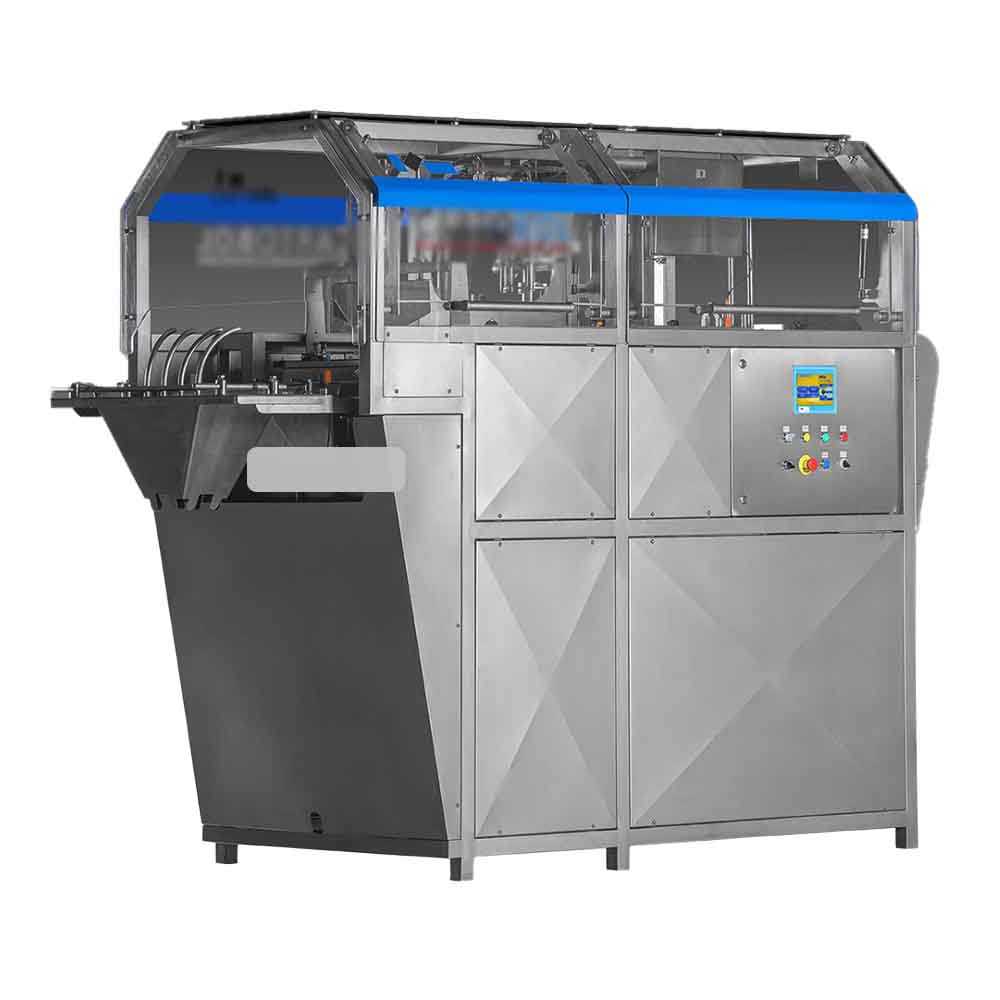
A complete line starts from the prepared product and ends with the pallet ready for delivery. We offer equipment for complete Bag in Box solutions:
- Bag in Box fillers (manual, semi-automatic or automatic), including aseptic filling systems for drums;
- Bag in Box case formers, which prepare the corrugated cardboard box the bag goes into;
- Bag in Box carton closing systems;
- pressurized buffer tanks, which keep the product available to the filler and separate filling from the rest of the process;
- filtration equipment, for the product that goes into the bag;
- Bag in Box case palletizing systems;
- Bag-in-Box packaging: transparent or metallized bags;
- a wide range of bag-in-box taps, caps, valves and connectors.
You do not need all of them from the start. Many producers start with the filler and the packaging, and automate box forming, case closing or palletizing as volumes grow. The batch number and date are usually printed on the box directly on the line, with a case marking solution.
Manual, semi-automatic or automatic filling: how do you choose the filler?
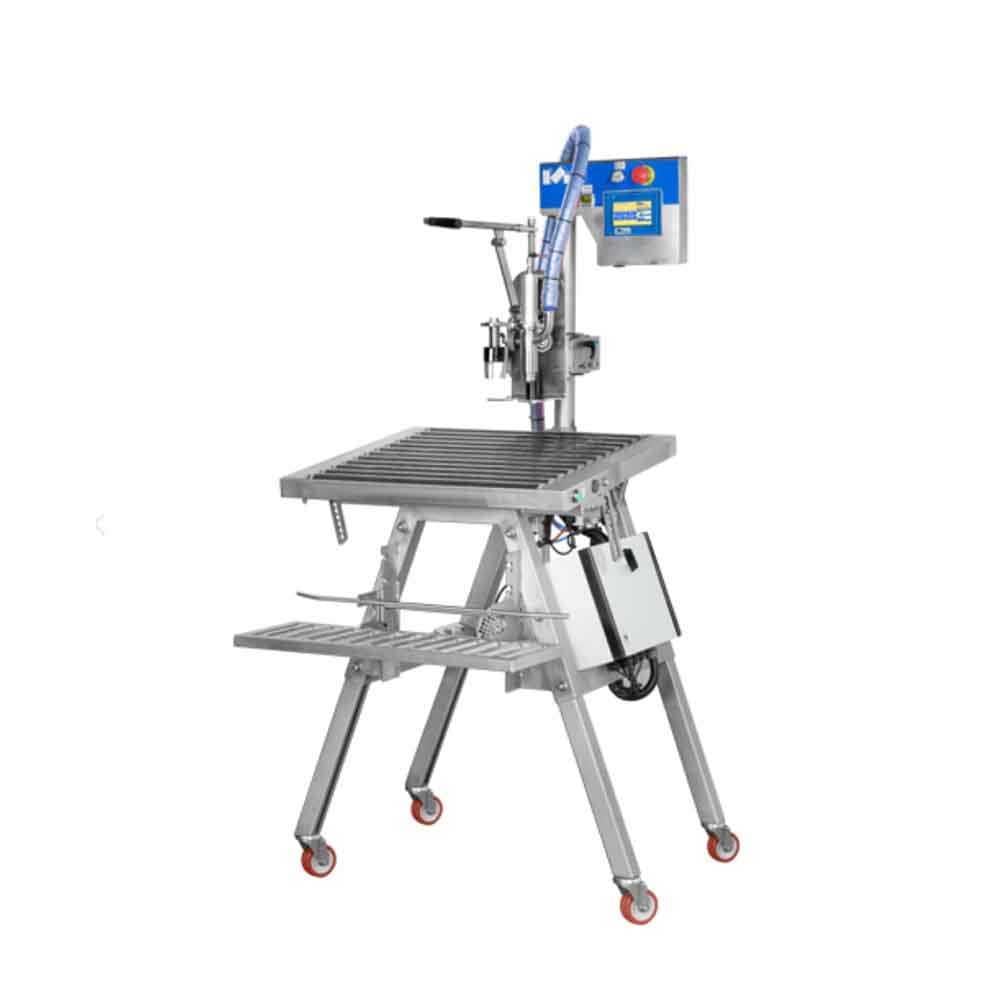
Choose the filler according to the number of bags per day, how often you change product or format and the hygiene requirements. All versions measure the quantity and close the bag; they differ in how much the operator does and how much the machine does.
The manual filler
The operator places the bag, starts the filling and puts the closure back on. It suits small producers, wineries or workshops that fill short batches and want to test the market with a new format, with a small investment.
The semi-automatic filler
The machine takes over some of the movements, for example removing and replacing the cap or measuring the quantity, while the operator loads and unloads the bags. You gain speed and repeatability without a full line.
The automatic filler
The bags arrive on a conveyor, are filled and closed without operator intervention, and the machine links to the case former and the palletizer. This is the option for large volumes and continuous production. Depending on the model, the filler can remove the air from the bag before filling, so that the product stays in contact with oxygen as little as possible.
Aseptic filling
For sensitive products, such as dairy, liquid egg or some juices, filling is done aseptically: the treated product and the sterile bag meet in a protected zone, without being contaminated. Aseptic filling systems for drums are used for large bags delivered to other processors. See also the dosing and filling solutions for other containers.
If you do not yet know what volumes you will have, choose a filler that can later be extended with automatic case forming and closing. The investment is made in stages, as the format catches on with your customers.
What should you prepare before requesting a quote?
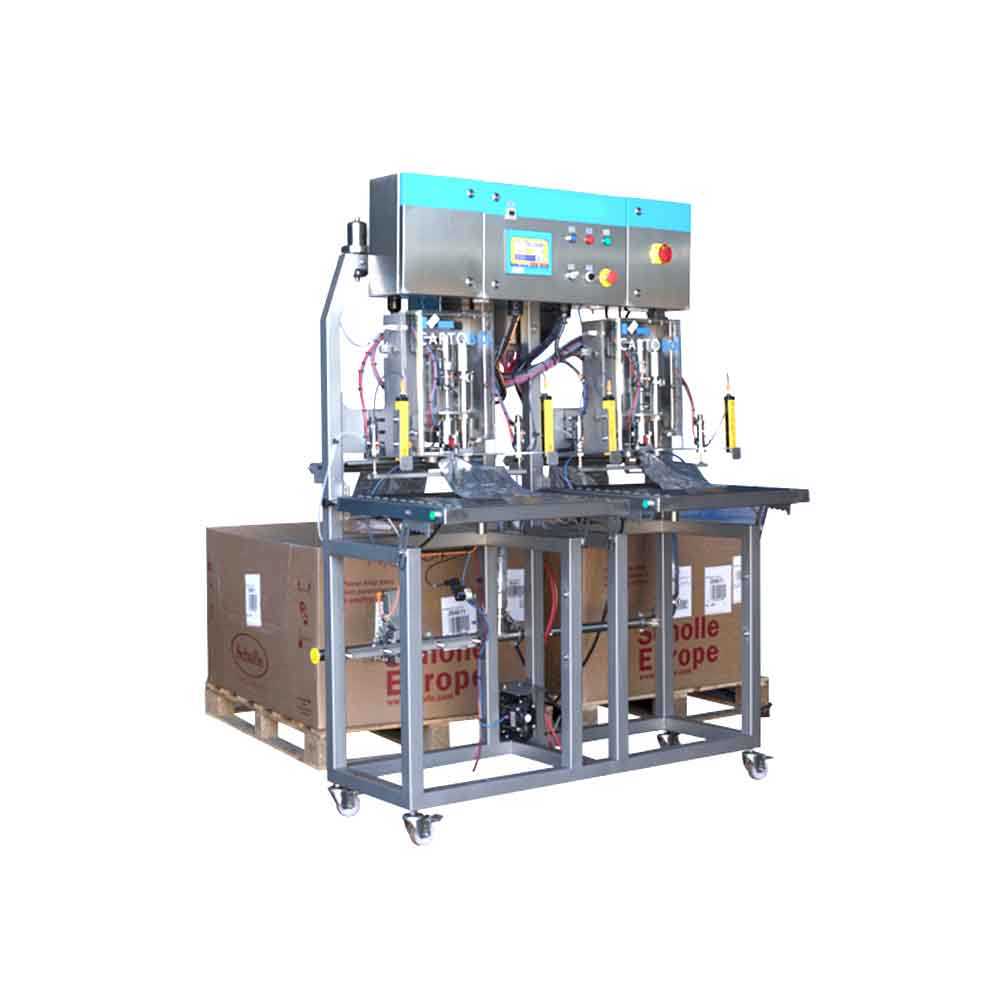
Prepare the data on the product, the packaging and the volume: they decide the type of filler and the rest of the line.
- The product: what you fill, at what temperature, how viscous it is, whether it contains particles or foams.
- The formats: which bag volumes you want to sell and whether you change them often on the same line.
- The packaging: transparent or metallized bag, the type of tap, cap, valve or connector your customers require.
- The volume: how many bags per shift and per year, today and a few years from now.
- Hygiene: whether the product requires aseptic filling or just a line that is easy to clean.
- What happens after filling: who forms and closes the boxes, how the batch is marked, how palletizing is done.
- The space: a sketch of the area, showing where the product comes from and where the pallets leave.
With this information you receive a proposal built on your application, not a piece of equipment picked from a catalog.
How does Imark Sistem help you?
We start from your product and volumes and propose the right option: from a manual filler to get started to a complete bag-in-box line, with case forming and closing, filtration, buffer tank and palletizing. We help you with packaging and closures, commission the equipment, train the operators and provide service and spare parts.
Send us a description of the product, the formats you want and an estimate of the volumes. You can reach us at +40 21 255 71 74, at office@imarke.ro or on the Contact us page.
Frequently asked questions about bag-in-box packaging
What does a bag-in-box package consist of?
Bag-in-Box (BIB) packaging consists of a bag with a tap, cap or valve and a corrugated cardboard box. The bag can be transparent or metallized, with different levels of protection against oxygen and light.
Why does the product stay fresh after opening?
The bag-in-box system prevents air from entering during dispensing: the bag collapses as it empties, and the product stays under vacuum until the contents are finished.
Which products can be packed in bag-in-box?
Fruit and vegetable juices, dairy products, wines, edible oils, water, syrup mixes for restaurants and liquid egg for HoReCa, generally liquids and fluid products consumed in portions.
Can I start with a manual filler?
Yes. Bag-in-box fillers are manual, semi-automatic or automatic. A manual filler is a good start for small batches, and case forming, case closing and palletizing can be added as volumes grow.
When do I need aseptic filling?
When the product is microbiologically sensitive, such as dairy, liquid egg or some juices, and must keep without refrigeration or for longer. We also offer aseptic filling systems for drums.