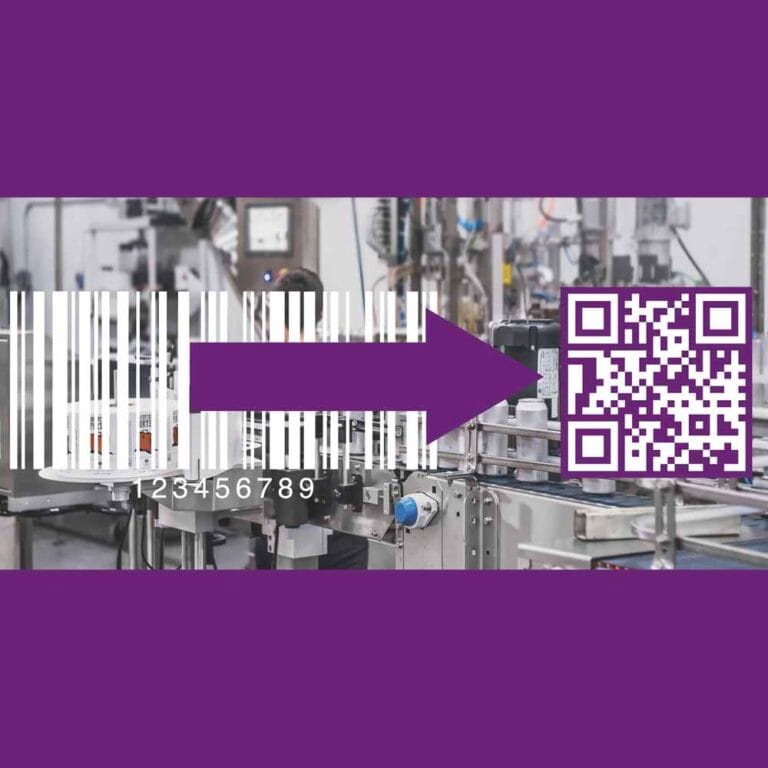


GS1 Sunrise 2027 is the point by which retail checkouts should be able to read 2D codes as well as the classic barcode. For a manufacturer, the practical question is not “what is a 2D code” but “what do I have to do in my factory, and in what order”. The guide below gives you an eight-step plan, the people you need to involve and the mistakes that cost time.
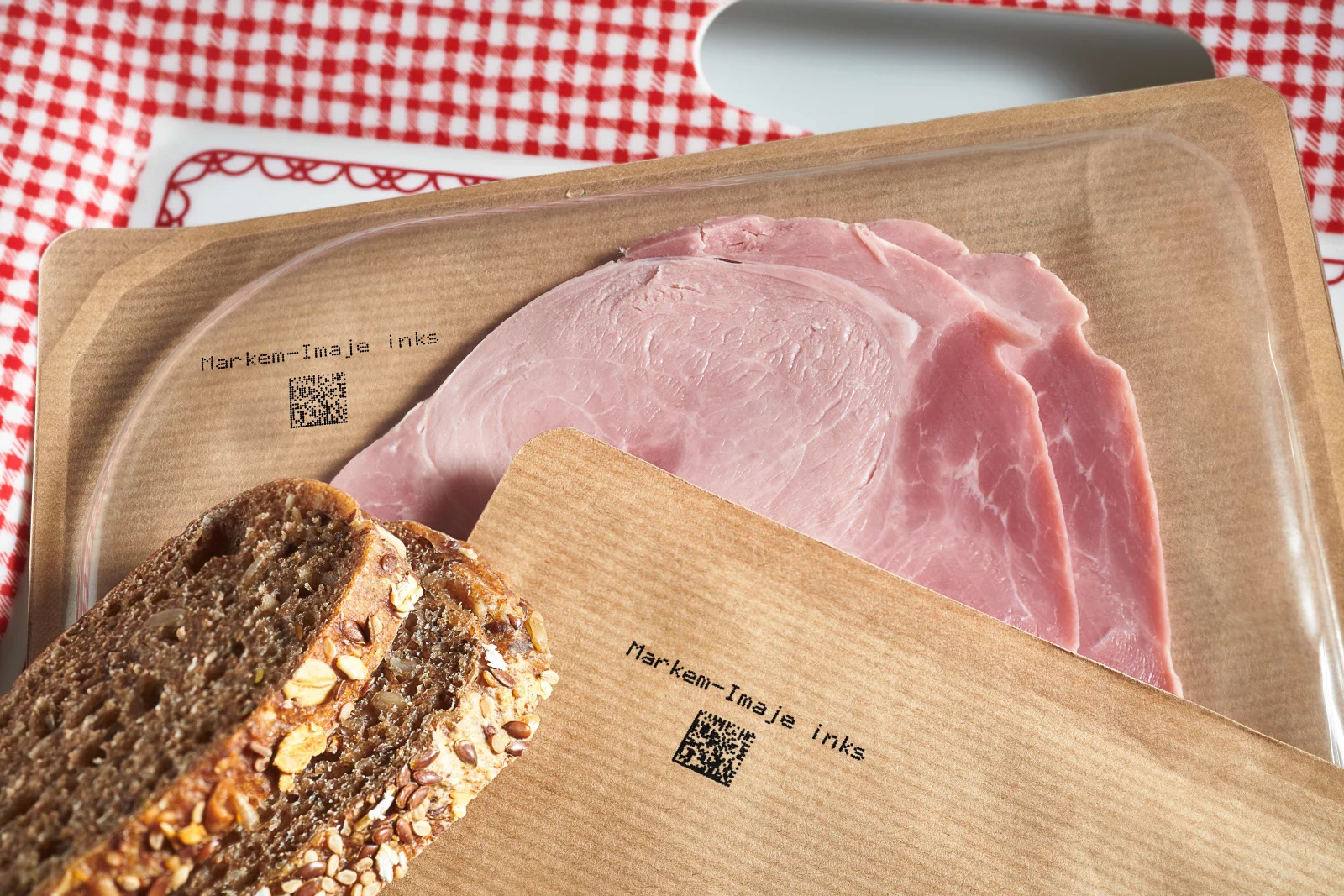
What changes for you with GS1 Sunrise 2027?
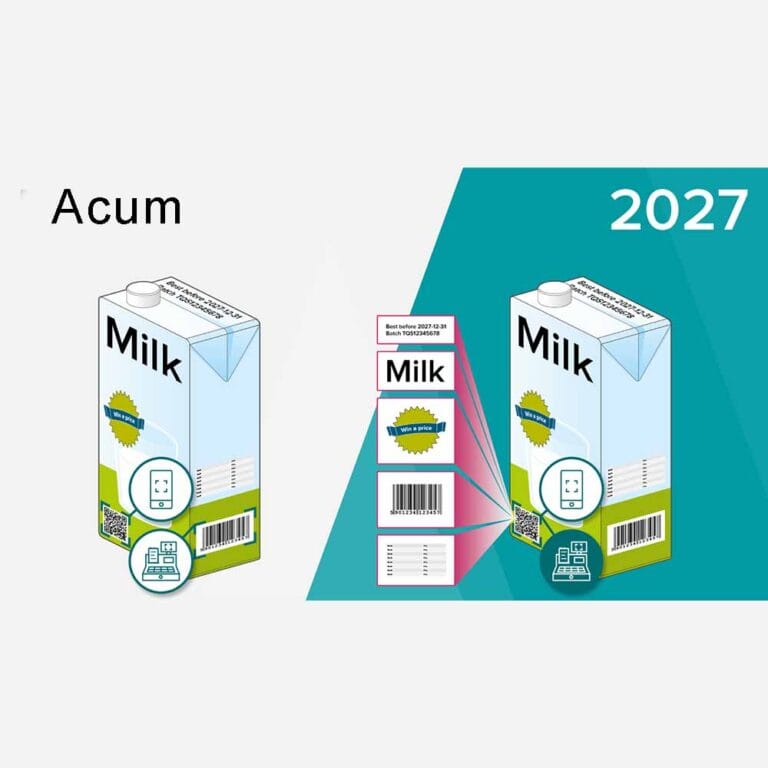
Through the Sunrise 2027 initiative, GS1, the organisation that manages barcodes, is preparing retailers and the supply chain so that, by the end of 2027, checkouts can read 2D codes: QR codes with GS1 Digital Link or GS1 DataMatrix. The classic code (EAN-13) only identifies the product. A 2D code can also carry the batch, the expiry date or a serial number in the same symbol.
Sunrise 2027 is not a law. It is an industry transition, and the pressure comes from customers: retail chains want to block expired or recalled products at the checkout and manage stock by batch. Suppliers who can deliver products with a correct 2D code will be ready when the requirement appears in the contract. During the transition, the classic barcode usually stays on the pack alongside the 2D code.
For a plain explanation of the terms, see our page on 2D codes ready for GS1 Sunrise 2027. The specifications of the standard are available from GS1.
Where do you start? The eight-step plan
Start with an inventory of your products and packaging, not with equipment. Most delays happen because a company buys printers before it knows what data it wants in the code and where that data will come from. The order that works:
1. List your products and packaging
For each product code, note the packaging type (film, carton, glass, can, label), where the variable data (batch, date) is printed today and with what equipment. Packaging preprinted by your supplier and data printed on the line are two different problems: a 2D code with batch and date is usually printed on the line.
2. Decide what data goes into the code
The minimum is the product code (GTIN). Batch and expiry date are usually added, because they bring the real benefit in store. A serial number is only used where each unit has to be identified individually. Quality, marketing and sales take this decision together, based on what customers ask for.
3. Choose the code type and its position on the pack
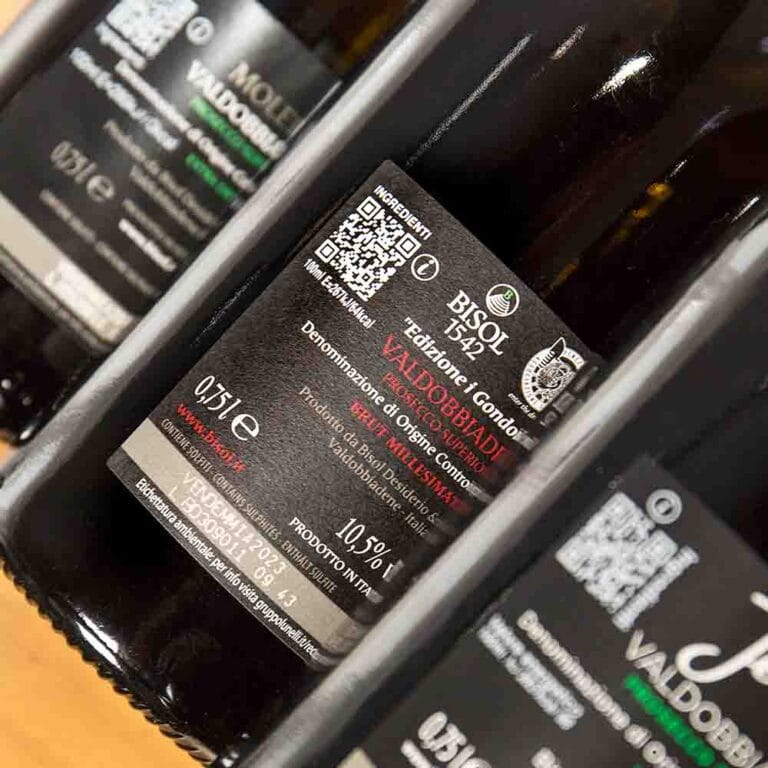
A QR code with GS1 Digital Link can also take shoppers to online product information; GS1 DataMatrix is compact and suits small spaces. Place the code where it is easy to scan at the checkout and where it fits at the minimum size recommended by GS1.
4. Check whether your line equipment can print the code
Many older printers can print text and dates, but not a readable 2D code at line speed. For each line, check the marking technology (continuous inkjet CIJ, thermal inkjet TIJ, thermal transfer TTO, laser or label), the resolution, the speed and the material you print on.
5. Connect the data to the printer
A 2D code with the wrong batch and date is worse than no code at all. The data has to come automatically from the production system or the ERP, not be typed in by the operator at every batch change. This is where IT comes in, usually together with software that manages messages across all lines.
6. Check code quality
A code that a phone can read is not automatically a good code. The quality of 2D codes is measured with dedicated verifiers, against symbol quality standards. Decide what you check at batch start-up, how often, and what you do when a code fails.
7. Run a pilot with one product and one customer
Pick a product with good volume, one line and a customer who wants to test. The pilot shows you the real problems: the code the checkout cannot read, the data that does not arrive correctly, the operators who do not know what to do when an error occurs.
8. Roll out to the rest of your products

After the pilot, roll out line by line, starting with the customers who ask for the code and with perishable products, where batch and date bring the biggest benefit. Train the operators on each line before start-up.
Who do you involve in the project?
A 2D code project rarely fails because of the technology and often because a department found out too late. The minimum team:
| Who | Why they matter |
|---|---|
| Management and finance | Approve the budget and the timeline; they want to know what the company gains, not just what it buys |
| Production | Knows which lines, speeds and batch changes there are |
| Quality | Defines the data in the code, the checks and what happens to a non-compliant code |
| IT | Connects the data from the ERP or production system to the printers |
| Sales | Brings in the requirements and timelines of key customers |
| Marketing and packaging | Decide where the code goes on the pack and, for QR codes, the online content |
| Your marking equipment supplier | Confirms what can be printed on each line and at what quality |
Which mistakes cost the most?
- Buying equipment before you know what data you want in the code. You risk a printer that cannot print the code at the size and speed you need.
- Entering data manually. Every batch change typed in by an operator is a chance of a wrong code on thousands of products.
- Testing the code only with a phone. At the checkout, at scanning speed and on real packaging, the result can be different.
- Leaving everything until 2027. Testing, data integration and training take time. Large customers may ask for the code before the official deadline.
2D codes are not only for the product on the shelf. The same principle applies to cases and pallets, where logistics labels can carry the batch and date. See our guide on automatic labelling of cases and pallets.
Checklist: where are you now?
Tick off what you already have. Whatever remains unticked is your work plan:
- you have a list of products, packaging and the lines where variable data is printed;
- you have decided what data goes into the code for each product category;
- you have chosen the code type and its position on each pack;
- you know which lines can already print 2D codes and which need new equipment;
- batch and date data reach the printers automatically;
- you have a procedure for checking code quality;
- you have agreed a pilot with one product and one customer;
- you know what your key customers require, and by when.
How can Imark Sistem help?
Imark Sistem is a GS1 Solution Provider Gold 2026. We help you work through the steps above: we assess your existing lines and equipment, propose the right Markem-Imaje marking solutions for each type of packaging, connect the data to the printers and verify the codes on your real product. We usually start with a line assessment, which tells you what you can keep using and what needs to change.
You can reach us at +40 21 255 71 74 or at office@imarke.ro. See also our marking and coding and traceability solutions.
Frequently asked questions about GS1 Sunrise 2027
Am I legally required to switch to 2D codes in 2027?
Sunrise 2027 is not a law but a transition coordinated by GS1. The practical obligation comes from customer requirements, especially from retail chains, which may add the 2D code to their listing conditions.
Do I have to remove the classic barcode from the pack?
Not straight away. During the transition, the classic barcode usually stays on the pack alongside the 2D code, so the product can still be scanned in stores that do not yet have 2D scanners.
Which code should I choose: QR or DataMatrix?
A QR code with GS1 Digital Link is useful if you want shoppers to reach product information with their phone. GS1 DataMatrix is compact and widely used on small packs and in regulated industries. The choice depends on the product, the space available and what your customers ask for.
Can I use the printers I already have?
Sometimes, yes. It depends on the technology, the resolution, the line speed and the material. A line assessment shows you which equipment can print the code at the required quality and where you need something else.
How long does a 2D code project take?
It depends on the number of lines and products and on how easily the data can reach the printers. A pilot on one line can be done relatively quickly; rolling out across the whole factory takes longer. That is why it is worth starting now.